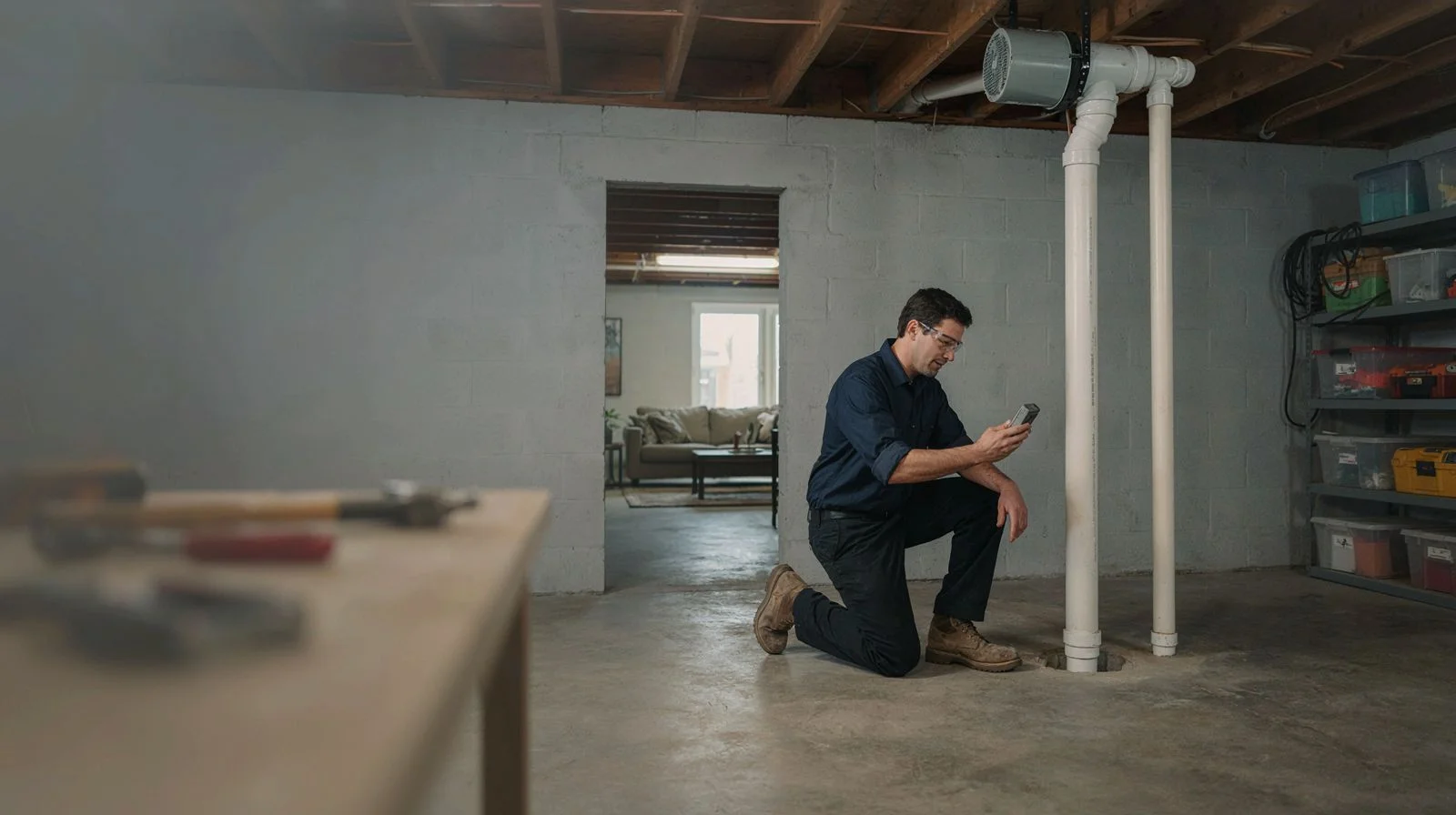
York area radon specialists
Radon Mitigation in York Township, PA
Radon testing and systems for homes across York Township. Local pros design solutions that fit your property and meet current guidance.
Radon help for York Township homes
Radon mitigation in York Township, PA protects your family by reducing radioactive gas that seeps through foundations. Radon Mitigation York PA connects homeowners in York Township, PA with local radon mitigation pros who handle testing, system design, and the post‑mitigation radon test. You get practical solutions from contractors who know our soils, basements, and weather.
Based in York, PA, we focus on clear communication, neat workmanship, and proven results. Phone lines are open during normal hours at (223) 877-3977 for questions about scheduling and service coverage.
Whether you need a first radon test or a full mitigation system, matched contractors can handle block foundations, crawlspaces, and finished basements. They size fans correctly, seal key entry points, and verify performance with a follow‑up test so you have documented results for your records or a home sale.
Why York Township, PA homes need radon solutions
York Township’s mix of post‑war ranches, split‑levels, and newer two‑stories often includes full basements or partial slabs where radon can collect. Fractured shale and metamorphic bedrock common in south‑central Pennsylvania can generate radon that migrates through cracks, sump pits, and utility penetrations. With many homes insulated for winter and running HVAC much of the year, interior pressure can pull soil gases inside. Pennsylvania is known for elevated readings, so testing and mitigation are widely recommended when levels meet or exceed the EPA action level EPA guidance.
Radon mitigation for York Township homes
Homes in York Township, PA frequently have basements, utility rooms, and slab additions that give radon multiple pathways indoors. Local pros connected through Radon Mitigation York PA plan systems around real conditions on your property; concrete thickness, drain tile, footer depth, and the best exterior discharge point. They also consider winter stack effect, summer AC use, and wind exposure so the system stays effective in all seasons.
A standard approach in our area is sub‑slab depressurization. Installers core a suction point through the slab, create a small collection pit, then route PVC to a radon fan that safely exhausts above the roofline. When a crawlspace is present, they may seal the soil with reinforced membrane and draw air from that zone, too. Sealing obvious gaps (sump lids, utility penetrations, cold joints) supports performance without trying to make the house airtight.
How we reach you from downtown York
Crews stage from 441 E. Market St., Suite 18202, York, PA 17403 and typically head south into York Township via South Queen Street (PA‑74) for properties in Spry and Tyler Run, or hop on I‑83 to Exit 16 or Exit 14 for addresses nearer Leader Heights Road. For homes toward Camp Betty Washington Road or the east side of the township, Prospect Street and local connectors keep the trip direct. This proximity helps simplify site visits, short‑term testing drop‑offs, and timely installations during real estate timelines.
Landmarks and neighborhoods we know
Contractors regularly work near William H. Kain County Park, Lake Redman, and Lake Williams, where terrain and tree cover can influence vent placement and fan noise considerations. In Spry and Tyler Run, many houses from the 1960s–1990s have block foundations and sump pits - features that lend themselves to reliable single‑point systems if the slab communicates well. Along South Queen Street, tighter lot lines call for cleanly routed exterior piping that blends with siding and meets discharge height guidance.
Radon testing done right
Pros offer both short‑term and long‑term testing options and follow accepted placement practices so readings reflect typical living conditions. Short‑term devices are set on the lowest lived‑in level, away from drafts and heat sources, with simple closed‑building guidance during the test window EPA testing basics. If your first result is at or above the action level, a second test or immediate mitigation (depending on the level and situation) is discussed clearly so you can decide confidently.
Post‑mitigation radon test for proof
After installation, a post‑mitigation radon test confirms performance. Pros allow the new system to run long enough to stabilize, then place a calibrated device on the appropriate level. You receive clear documentation of the average concentration and any notes relevant for home sales or your records. Many York Township homeowners also plan a recheck every couple of years or after major renovations.
System design for York Township construction
- Ranches and split‑levels: Many ranches in York Township have centrally located mechanical rooms that make for efficient suction point routing. Split‑levels may need creative piping to connect multiple slab sections; pros first test slab communication to decide whether a single or multi‑point system is warranted.
- Finished basements: When finished spaces limit access, installers often locate the suction point in a utility closet and route piping through rim joists with neat exterior runs that respect siding lines and HOA preferences.
- Crawlspaces and additions: Encapsulation with a sealed membrane, taped seams, and a dedicated suction allows one fan to serve both slab and crawl zones when planned correctly.
Fans, noise, and curb appeal
York Township neighborhoods along South Queen Street and near Leader Heights value quiet operation and tidy routing. Pros select appropriately sized, energy‑efficient fans and use vibration‑dampening couplings to minimize hum. Exterior pipe is typically painted to match the house, and discharge points are set to avoid windows, decks, and common outdoor seating areas while meeting height and distance guidance.
Homes near lakes, slopes, and trees
Properties bordering William H. Kain County Park, Lake Redman, and Lake Williams often sit on sloped lots with mature trees. On these sites, contractors plan fan placement where service access is safe year‑round and snow shedding from roofs won’t damage piping. Downspout lines and utility penetrations are mapped carefully so the radon system integrates without conflicts. Where groundwater is high or sump pits cycle frequently, sealed lids and gaskets are prioritized to reduce radon entry and maintain sub‑slab vacuum.
What to expect on installation day
Most systems in York Township can be installed within a day once the plan is approved. Work areas are protected, dust is contained during coring, and crews clean up thoroughly. The installer labels the system, shows you the fan indicator, and reviews simple upkeep steps, like checking the manometer and listening for unusual noise. If electrical work is needed for a dedicated outlet, it’s coordinated to meet standard practices.
Maintenance and follow‑up
Radon fans are designed for continuous duty. Homeowners can visually check the indicator tube and, if equipped, a simple alarm. If performance concerns arise - such as new cracks, a renovation, or a fan that no longer runs - local pros can evaluate suction levels, reseal key gaps, and advise on retesting. Periodic rechecks keep your documentation current and your system tuned to the home’s conditions.
Transparent guidance on options and costs
Every home in York Township is different, so recommendations are based on your layout, slab communication, and target levels. Pricing depends on the job scope, materials, and fan sizing and is covered on our cost page: radon mitigation costs in York Township. You’ll receive straightforward options that explain tradeoffs, like single versus multi‑point suction, interior versus exterior routing, and fan location choices.
Our Services in York Township, PA
Typical radon mitigation cost in York Township, PA from independent local contractors (same as elsewhere in the York, PA area): $1,100 - $3,800. See typical radon mitigation costs near York Township, PA.
Why York Township, PA Chooses Radon Mitigation York PA
Local know‑how
Pros understand York Township basements, sump pits, and common slab layouts, so systems are designed for real results here.
Neat, code‑conscious installs
Clean piping, labeled components, and proper discharge heights help systems look good and perform well over time.
Clear testing and reports
From initial radon testing to the post‑mitigation radon test, you get plain‑English results you can keep for your records.
Quiet, efficient fans
Contractors select right‑sized, reliable fans and use vibration control to limit sound in tight neighborhoods.
Easy access from downtown
Staging near York, PA keeps site visits and follow‑ups efficient across Spry, Tyler Run, and the wider township.
Radon Mitigation FAQs in York Township, PA
How do local pros travel from 441 E. Market St., Suite 18202, York, PA 17403 to radon mitigation jobs in York Township, PA, and which routes are typical near I‑83, Leader Heights Road, and South Queen Street?
Installers usually head south on South Queen Street (PA‑74) for homes in Spry and Tyler Run. For properties closer to Leader Heights, crews take I‑83 to Exit 14 or Exit 16 to keep the route direct. East‑side addresses are reached via Prospect Street and Camp Betty Washington Road. This proximity helps with timely site visits and test drop‑offs.
For homes near William H. Kain County Park, Lake Redman, or along Camp Betty Washington Road in York Township, PA, do radon systems need special vent planning?
Lots near lakes and wooded slopes may have wind and roof‑snow patterns that affect discharge placement. Pros choose vent heights and locations that avoid nearby windows and outdoor seating while keeping service access safe. Tree cover and terrain are also considered to maintain good airflow around the exhaust.
How is radon mitigation adapted for split‑levels, ranches, and finished basements in Spry and Tyler Run in York Township, PA?
Split‑levels sometimes need multiple suction points if slab sections don’t communicate well, while ranches often work with a single, central suction. Finished basements are served with tidy routing from a utility room or closet to keep living spaces undisturbed. Installers confirm the plan with slab communication checks before drilling.
Is well water radon testing recommended with radon mitigation in York Township, PA for properties on private wells near the outskirts by Lake Williams?
Where private wells are used, a water test can rule out radon contribution from domestic water. If waterborne radon is present, mitigation may pair an aeration or granular activated carbon unit with the sub‑slab system. Local pros can advise based on your well location and indoor air levels.
What seasonal factors in York Township, PA affect radon testing and the post‑mitigation radon test, especially during winter inversions or summer HVAC use?
Winter stack effect often raises indoor radon, so short‑term tests in colder months can run higher. In summer, strong AC can also influence pressure and airflow. Pros time the post‑mitigation radon test so the system has stabilized and provide simple guidance to keep conditions consistent during measurement.
Where can a radon fan go on a York Township, PA home to meet performance and appearance goals, and how do pros handle noise near South Queen Street?
Fans are commonly placed in garages, attics, or on exterior walls away from bedrooms. Installers use rubber couplings and careful mounting to reduce vibration and route piping to blend with siding. On busier corridors like South Queen Street, discharge points are set thoughtfully to minimize sound and visual impact.
Contact Us Today for a Free Estimate
Free — no obligations