York, PA radon pros
Radon Mitigation in Shrewsbury, PA
Local pros serving southern York County. Testing, mitigation, and post‑mitigation checks for safer air.
Straight answers, local help
For radon mitigation in Shrewsbury, PA, Radon Mitigation York PA connects homeowners in Shrewsbury, PA with local radon mitigation pros. You get practical guidance on radon testing, a plan for mitigation if needed, and a clear post‑mitigation radon test to verify results.
Pros in our network focus on clean installs that fit your home’s layout; whether you have a finished basement, a partial slab, or a crawlspace. From the first test through the final verification, they explain options in plain language and set expectations on timing and appearance.
Based in York, PA, our office keeps regular 9 AM–5 PM hours seven days a week at (223) 877-3977. That local base helps match you with nearby technicians who know the area, its housing, and the common vent routing choices.
Radon and Shrewsbury, PA homes
Shrewsbury, PA includes a mix of older farmhouses and many 1980s–2000s subdivisions where full basements and block or poured‑concrete foundations are common; prime pathways for soil gas entry. Southern York County’s varied soils and fractured rock can allow radon to move under slabs and into sump pits and utility penetrations. Pennsylvania overall has a high likelihood of elevated radon, so testing and, when needed, professionally designed mitigation remain important for local homes PA DEP radon guidance.
Serving Shrewsbury from the York office
Local installers typically head south from 441 E. Market St., Suite 18202, York, PA 17403 in York, PA, join I‑83 South, and exit at PA‑851 to reach Shrewsbury efficiently. In lighter traffic, some pros also use Susquehanna Trail for addresses west of the borough center. That short highway run means appointments can be planned reliably around school hours and work schedules, with minimal time lost in transit.
What we see in Shrewsbury homes
Shrewsbury features split‑levels and colonials from the 1990s and newer, along with earlier ranches and a few historic houses. Basements are the lowest livable areas in most of these homes, so testing devices and mitigation suction points are placed there. Installers evaluate slab thickness, drain tile, sump pits, and foundation joints to choose the right system... often sub‑slab depressurization with a sealed, discrete vent path.
Radon testing, made simple
Testing typically starts on the lowest level suitable for use, following EPA measurement guidelines to avoid drafts or unusual HVAC patterns that can skew results EPA radon basics. For real‑estate timelines, local pros use calibrated devices and clear test logs to keep the process on track. When levels exceed the action threshold, they outline mitigation options and where fans and exterior vents can land without crowding windows or soffits.
A system designed for your layout
Sub‑slab depressurization is tailored to the home’s footprint. On newer cul‑de‑sacs with tight side yards, a single, well‑sealed suction point may be enough, routed to a quiet, weather‑rated fan outside the living space. Where there are multiple slabs or additions, pros may add a second suction point or connect a sealed sump lid to improve communication under the floor. The goal is reliable pressure field extension with the least invasive path.
Vent routing around local site features
Along East Forrest Avenue (PA‑851) or near the borough center, side setbacks and visible front elevations matter. Pros route piping along rear or gable walls when possible, position the discharge well above the roofline, and respect clearances from windows and property lines. Near Heritage Rail Trail County Park, where rear yards often slope, they plan supports and brackets so piping remains secure and unobtrusive over time. Close to the Paul Smith Library of Southern York County or Shrewsbury Square, the same care is taken to keep systems tidy and compliant in busier streetscapes.
Mixed foundations, crawlspaces, and additions
Some Shrewsbury addresses have a main basement plus a small crawlspace under an addition. In those cases, professionals seal the soil in the crawlspace with a durable membrane and tie that zone into the primary radon system, or create a dedicated suction for the crawlspace if it balances airflows better. The approach depends on testing results and how well soils under each slab communicate.
Installation day, what to expect
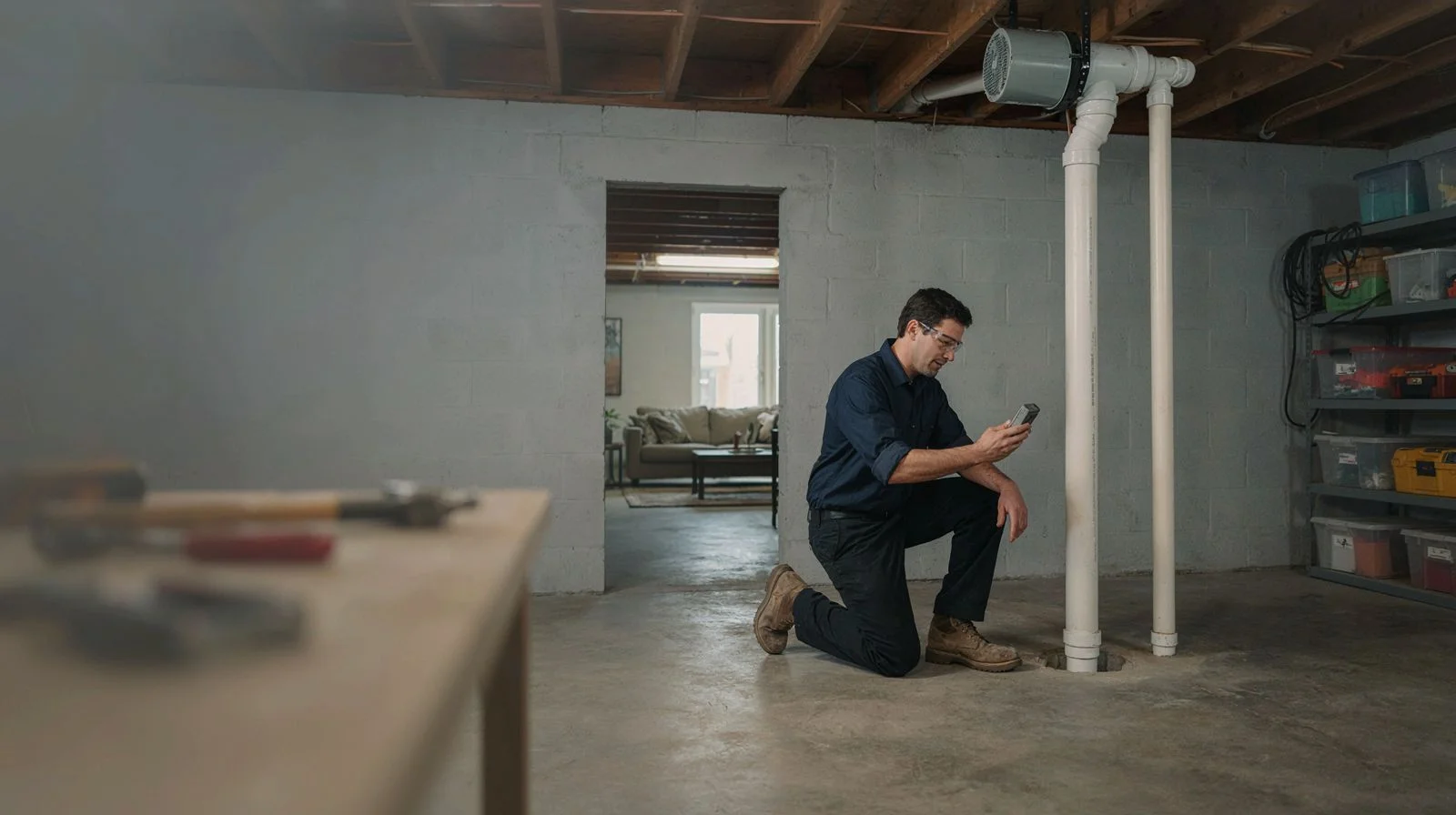
The crew confirms the vent route and suction point, protects floors, and drills neatly through the slab. Piping is run cleanly, joints are sealed, and penetrations are caulked. The fan is mounted outside conditioned spaces, wiring is completed by a qualified technician, and a simple gauge is set up so you can confirm the system is drawing. Before wrapping up, they walk through the components and basic checks.
Post‑mitigation radon test and verification
After the system stabilizes, a post‑mitigation radon test confirms performance. Local pros place the device properly, record conditions, and explain the results in everyday terms. If a rare adjustment is needed - like opening a secondary suction point or tweaking a fan size... they outline the simplest fix to keep levels consistently below the action threshold.
Appearance, sound, and placement details
Installers aim for a quiet, low‑profile result. Fans are kept outside living areas; often near a rear corner; while discharge points clear the roof and avoid windows. In neighborhoods with close neighbors off East Forrest Avenue, that thoughtful placement reduces visual impact and keeps noise where it’s least noticed.
Care and long‑term reliability
Radon systems are easy to own. Keep the exterior fan clear of debris, make sure downspouts don’t soak the suction area, and glance at the indicator to confirm the system is pulling. If your home improvements change the lowest livable level or add a slab, a quick check by a pro ensures the system still covers the full footprint. Periodic retesting is prudent to verify continued performance.
Timing and cost basics
Availability varies with season and weather, but the short I‑83 hop helps keep schedules predictable. Pricing depends on the home’s layout, slab conditions, and vent path, and it’s covered in detail here: radon mitigation costs in Shrewsbury, PA. You’ll receive a straightforward scope describing the system type, materials, and any electrical or sealing work included.
Where we work in town
Technicians frequently serve addresses near Main Street, homes around Shrewsbury Square, and properties not far from Heritage Rail Trail County Park. They also cover streets branching off East Forrest Avenue and neighborhoods tucked between the borough and the township line. Whether your driveway faces a tight side yard or a sloped backyard, the plan adapts to fit the site.
Our Services in Shrewsbury, PA
Shrewsbury, PA radon mitigation pricing from independent local contractors matches the rest of the York, PA area: $1,100 - $3,800. See Shrewsbury, PA radon mitigation pricing.
Why Shrewsbury, PA Chooses Radon Mitigation York PA
Local routes, reliable arrival
Pros use I‑83 and PA‑851 daily, so timing to Shrewsbury is predictable and windows are kept tight.
Tailored systems for basements
Shrewsbury’s full basements and mixed slabs are addressed with the right suction points, sealing, and vent routing.
Clear testing and proof
You get straightforward radon testing and a documented post‑mitigation radon test to verify results.
Neat, low‑profile installs
Piping runs are kept tidy, discharge points clear windows and rooflines, and fans are placed for quiet operation.
Straightforward planning
Scopes, timelines, and next steps are explained in plain language so you know exactly what will happen and when.
Radon Mitigation FAQs in Shrewsbury, PA
How do local pros travel from 441 E. Market St., Suite 18202, York, PA 17403 to radon mitigation jobs in Shrewsbury, PA?
They typically drive I‑83 South from central York and use the PA‑851 exit into Shrewsbury. For homes west of the borough center, some may take Susquehanna Trail to reduce backtracking. Those routes keep arrival times steady, even when school traffic is busy around East Forrest Avenue.
For homes near Heritage Rail Trail County Park or along East Forrest Avenue in Shrewsbury, PA, how is vent placement planned for radon mitigation?
Installers favor rear or gable walls to reduce visibility, with the discharge point above the roof and away from windows. On sloped yards near the trail, supports and brackets are planned so exterior piping stays secure and straight.
How is radon mitigation adapted for 1990s colonials and ranch homes in Shrewsbury, PA with full basements or partial slabs?
Pros evaluate slab thickness, drain tile, and any additions to decide on single or multiple suction points. If a crawlspace is involved, a sealed membrane can be tied into the same system or handled as a separate zone for balanced airflow.
Is well water radon testing recommended with radon mitigation in Shrewsbury, PA, especially for homes near the township edge?
Many properties around the outskirts use private wells, so water testing is often considered when air levels are high. Local pros can screen the well and, if needed, recommend treatment that complements the air mitigation system.
What seasonal factors in Shrewsbury, PA affect radon testing and the post‑mitigation radon test?
Cold winters increase stack effect, which can draw more soil gas into basements, so closed‑house conditions are important during testing. Summer HVAC patterns can also shift airflow; professionals time tests and explain how to keep conditions consistent for reliable readings.
Are permits or electrical inspections required for radon mitigation in Shrewsbury, PA?
Requirements can vary between the borough and the surrounding township. Many systems include a powered fan, so a simple electrical inspection may be needed; local pros coordinate with the authority having jurisdiction when an inspection is required.
Contact Us Today for a Free Estimate
Free — no obligations