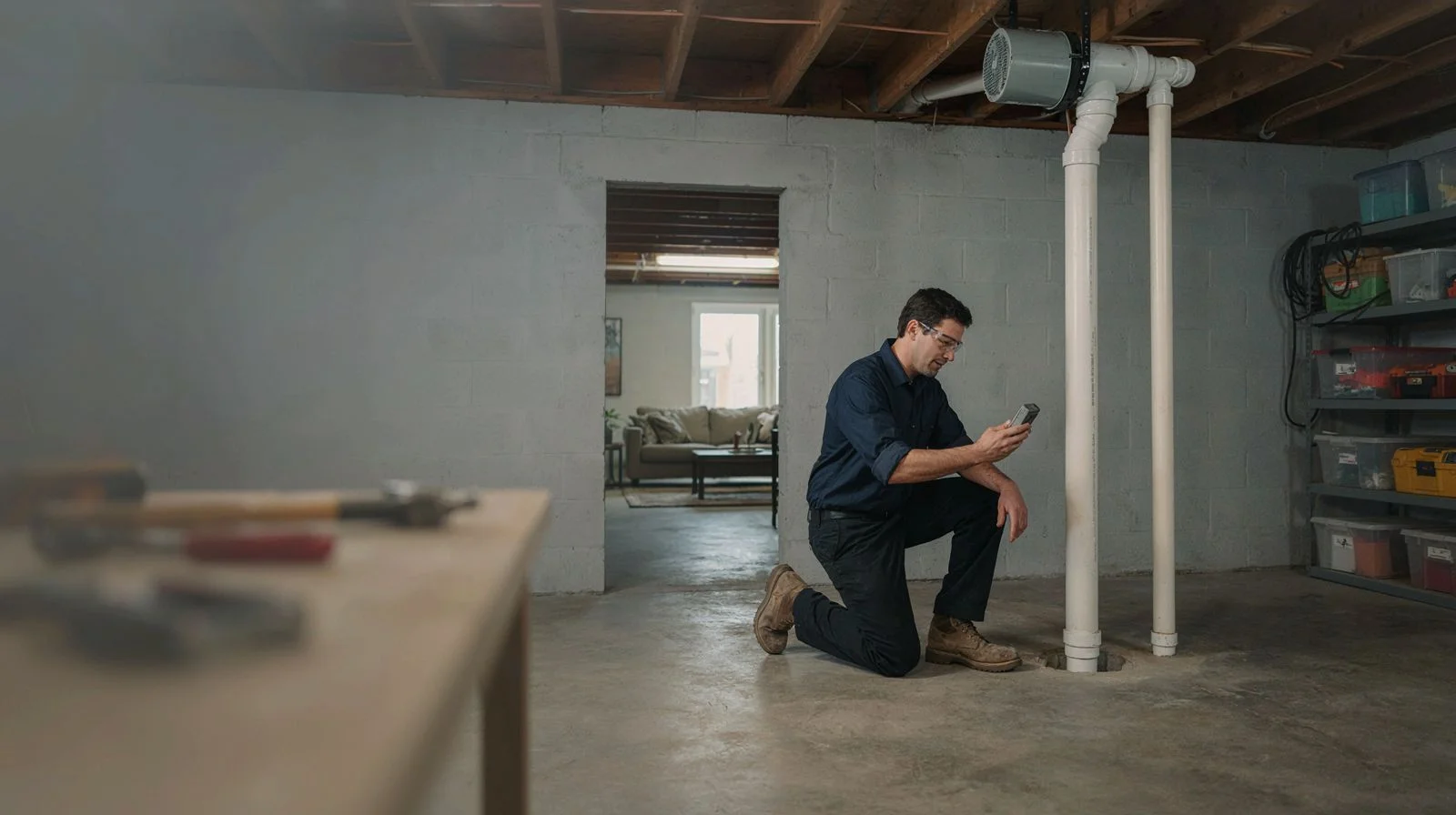
York‑area radon mitigation & testing
Radon Mitigation in Hanover, PA
Clean installs sized to your foundation, plus reliable post‑mitigation testing. Local crews travel from York, PA for straightforward scheduling in Hanover.
Radon help for Hanover homes
Radon mitigation in Hanover, PA protects families by reducing radioactive gas that can enter through foundations. Radon Mitigation York PA connects homeowners in Hanover, PA with local radon mitigation pros who design systems that fit the home and verify results with testing.
You’ll get straightforward guidance on whether short‑term or long‑term radon testing makes sense, plus clear options for system layouts that blend with typical Hanover rooflines and siding. The matched pros handle radon mitigation, radon testing, and the post‑mitigation radon test so you have a complete plan from start to finish.
We focus on practical details: quiet fans, neat piping, and vent locations that meet safety clearances while keeping curb appeal. Work is scheduled during normal daytime hours, with simple windows that respect school runs, work shifts, and everyday routines.
Questions about timing or coverage? We’re available 9 AM–5 PM daily at (223) 877-3977, with scheduling coordinated from our office in York, PA.
Hanover, PA conditions to consider
Hanover, PA has a mix of early‑20th‑century homes near Center Square and Wirt Park, post‑war ranches, and newer subdivisions with full basements... exactly the spaces where radon can accumulate. South‑central Pennsylvania’s geology can produce elevated soil gas, and winter stack effect draws radon upward when homes are closed and heated. Many properties also have block walls, interior French drains, or sumps that need sealing during mitigation. Routine testing and well‑planned sub‑slab or crawlspace systems are common here, following guidance from the EPA and Pennsylvania’s radon program PA DEP radon.
Serving Hanover homes with practical solutions
Homes in Hanover, PA range from close‑set properties around Center Square to quiet streets near Wirt Park and larger lots edging out toward Codorus State Park. The local pros we match you with design radon mitigation to suit each foundation type: poured slabs, block basements, partial basements with crawlspaces, and additions that created multiple slabs. The goal is simple - pull soil gas from beneath the home and vent it safely above the roofline, while keeping the system tidy, quiet, and effective.
How crews reach you from York
Scheduling is planned from our York base. For Hanover visits, technicians typically leave from 441 E. Market St., Suite 18202, York, PA 17403, head west on US‑30, then continue on PA‑116 (Hanover Rd/York St) into town. Depending on the exact address and traffic patterns, crews may also use PA‑74 toward Dover and cut across to Hanover’s north side. These routes make it straightforward to cover neighborhoods near Carlisle Street (PA‑94), the library area, and the streets around Hanover’s historic core without long detours.
Radon testing that informs good design
Accurate readings guide every decision. Local pros start with radon testing in the lowest livable level following closed‑house conditions. In some cases, a continuous radon monitor is used to spot daily swings; in others, a short‑term charcoal test under standard protocols is sufficient. If a home has multiple foundation sections, tests are placed to capture the highest‑risk areas so the mitigation plan reflects how the house actually breathes. Post‑mitigation testing then confirms improvement and documents the final reading for your records. EPA guidance recommends taking action at or above 4.0 pCi/L, with many homeowners choosing to reduce levels further when practical EPA radon.
System layouts that fit Hanover homes
- Sub‑slab depressurization: Most Hanover houses benefit from a single suction point through the slab, sealed to the floor and tied to schedule‑40 PVC that runs to an exterior fan and a discharge above the roof. When foundations are compartmentalized, additional suction points or interior channeling can even out pressure across the footprint.
- Basement and crawlspace combos: Older homes near Center Square or around Wirt Park often have a full basement plus a crawlspace under an addition. In these cases, pros seal the crawl with durable membrane and connect it to the same fan system, or, when needed, add a dedicated suction line so both areas are protected.
- Block wall considerations: On block‑wall basements, sealing penetrations and improving slab isolation are key. Where wall communication is strong, selective block‑void suction may be planned to reduce radon entering through porous masonry.
- Sumps and drains: If you have a sump pit or interior French drain, a gasketed, removable lid maintains access while keeping the system airtight. Discharge lines are routed to preserve service clearances and avoid windows, doors, and soffit vents.
Fan placement, noise, and winter performance
Pros serving Hanover choose fan models sized to the home’s airflow needs and pipe runs. Fans are commonly mounted outside or in a garage attic - never in a basement or livable space... to keep noise out of the home and meet safety best practices. Winter stack effect in Hanover can increase radon entry, so systems are designed with enough capacity to maintain suction during the heating season without creating freezing issues at the discharge. Where homes are close together, discharge is planned to meet clearance distances from neighboring windows and property lines while keeping the vent discreet.
Working around Hanover’s streetscapes and lot lines
Tight side yards and shared driveways are common near the center of town. To keep sidewalks clear and preserve curb appeal, exterior risers are often run along rear corners or less‑visible side elevations, with supports that match siding color. For homes along Carlisle Street (PA‑94) or York Street (PA‑116), pros pay special attention to pedestrian areas and second‑story windows when choosing vent height and termination. On newer subdivisions with larger setbacks, routing can be more direct with short pipe runs and minimal elbows to keep fan speeds lower and noise down.
Electrical and safety basics
Fans need a reliable electrical connection. The matched contractors coordinate licensed electrical work when required, ensuring a properly protected circuit, weather‑rated switch, and tidy conduit runs for exterior placements. Labeling and a visible manometer or gauge help you confirm operation at a glance. Where local inspection is needed, pros schedule it within the installation plan so testing can proceed promptly after system startup.
Post‑mitigation radon test and documentation
After the system has run long enough to stabilize, a post‑mitigation radon test verifies the result. The approach used... short‑term under closed‑house conditions or a continuous monitor; depends on the home and the timing window, such as a pending real estate transaction. You’ll receive clear documentation of the test location, method, and result. Pros also show simple upkeep steps, like confirming the fan indicator, keeping the discharge clear of snow or leaves, and checking sealed points if you remodel or add sump equipment.
Home styles we frequently see in Hanover
- Early‑20th‑century homes near the library and Center Square often have thick masonry, partial basements, and stacked floor plans. These usually get one or two suction points, with careful sealing around utility penetrations.
- Post‑war ranches and split‑levels on Hanover’s edges may have wide footprints with multiple slab sections. Routing often favors a central riser with low‑profile exterior piping.
- Newer two‑stories include full basements with poured slabs and modern mechanical rooms, which make for clean, short pipe runs and easy fan maintenance locations.
What influences timeline and pricing
Timeline depends on foundation complexity, number of suction points, and whether electrical work or inspection appointments are needed. Pricing varies for similar reasons, plus vent routing and fan size. You can review general expectations on radon mitigation costs in Hanover. Pros always confirm details on site so the plan matches your home’s age, layout, and finished spaces.
Reliable coverage across Hanover
Whether you’re near Wirt Park, along Carlisle Street, or on quieter blocks west of town, the local teams we connect you with plan routes that respect school start times, commuter traffic on US‑30, and typical weekday routines. Installations are scheduled during daytime hours, and post‑mitigation testing is coordinated so you can see verified results without delay.
Our Services in Hanover, PA
Hanover, PA radon mitigation pricing from independent local contractors matches the rest of the York, PA area: $1,100 - $3,800. See Hanover, PA radon mitigation pricing.
Why Hanover, PA Chooses Radon Mitigation York PA
Local routes, predictable arrivals
Crews plan Hanover visits using US‑30 and PA‑116, so timing windows are realistic even on busy weekdays.
Systems sized to your home
From small basements to multi‑slab additions, suction points and fan models are chosen to match your foundation and airflow needs.
Quiet, durable components
Weather‑rated fans and sealed fittings keep noise low and performance steady through Hanover’s cold winters and humid summers.
Clear testing and results
Pros explain initial testing, place devices correctly, and verify reductions with a documented post‑mitigation radon test.
Respect for curb appeal
Risers and vents are routed along less‑visible elevations, with tidy supports and color‑matched hardware where practical.
Straightforward scheduling
Work is coordinated during daytime hours with simple windows that fit school runs, commutes, and everyday routines.
Radon Mitigation FAQs in Hanover, PA
How do local pros plan travel from 441 E. Market St., Suite 18202, York, PA 17403 to radon mitigation jobs in Hanover, PA, and which routes help avoid delays?
Teams usually take US‑30 west from York and transition onto PA‑116 into Hanover. For addresses on the north side, some use PA‑74 before cutting across to town streets. Arrival windows are set around peak US‑30 traffic to keep schedules predictable.
For older houses near Center Square in Hanover, PA, how is radon mitigation designed for tight lots and shared walls?
Pros favor interior suction points with discrete exterior risers placed along rear or less‑visible side elevations. Vent terminations are set well above nearby windows and neighboring property lines, and sealing focuses on block walls, utility penetrations, and any open sumps.
Do homes along Carlisle Street (PA‑94) or York Street (PA‑116) in Hanover, PA need special vent placement for radon mitigation?
Busy corridors and close second‑story windows often require taller discharge heights and careful routing to the rear or a setback side. Installers also plan for snow shedding from roofs and keep clearances from soffit vents and walkways.
Is well water radon testing recommended with radon mitigation in Hanover, PA, especially for properties near Codorus State Park?
If a home uses a private well, water testing can help rule out radon contribution from fixtures like showers. Many homes on borough water don’t need it, but properties outside town limits with private wells often include a one‑time water test.
How does Hanover, PA’s winter heating season affect radon testing and the post‑mitigation radon test?
Cold months can increase stack effect, which may raise indoor radon. Testing under closed‑house conditions is straightforward in winter, and systems are sized to maintain suction during heating season. Post‑mitigation tests confirm performance once the system has stabilized.
Are permits or inspections required for radon mitigation in Hanover, PA, and who manages electrical work?
Requirements vary by municipality and utility. Contractors coordinate any needed electrical work for the fan circuit and schedule inspections when applicable, then proceed with post‑mitigation testing once approvals are complete.
Contact Us Today for a Free Estimate
Free — no obligations