Trusted York‑area radon help
Radon Mitigation in Emigsville, PA
Testing and mitigation for basements, slabs, and crawlspaces. Local pros design quiet, effective systems for your home.
Radon services for Emigsville homes
Radon mitigation in Emigsville, PA matters for families who want a healthier home. Radon Mitigation York PA connects homeowners in Emigsville, PA with local radon mitigation pros for radon testing, system design, and the post‑mitigation radon test. You get nearby expertise from contractors who understand York County houses and soil.
We work across the York area from our York, PA base. Office hours are 9 AM–5 PM daily for scheduling and service questions at (223) 877-3977.
Local contractors in our network handle everything from initial testing to installing a neat, code‑aware system and verifying performance afterward. Whether your home is a mid‑century ranch, a split‑level with an addition, or a newer townhome, the right plan is built around your foundation, layout, and ventilation needs.
Why Emigsville, PA needs radon solutions
Emigsville, PA has a mix of 1950s–1990s ranches and split‑levels, plus newer townhomes, many with full basements or partial slabs. York County sits in a high radon potential region where fractured shale and limestone can channel soil gases into foundations, and winter stack effect can raise indoor levels. Sump pits, block walls, and utility penetrations are common entry points in local homes. The Pennsylvania DEP reports that radon can be elevated in any home and recommends testing in all counties, including York PA DEP radon guidance.
Serving Emigsville from our York base
Emigsville, PA is just north of the city, which lets local contractors reach you quickly from our York office at 441 E. Market St., Suite 18202, York, PA 17403. Crews typically load up in the morning, confirm materials for your foundation type, and head north for on‑time arrivals in neighborhoods off Church Road and North George Street.
Fast, predictable routes to town
From East Market Street, technicians often hop onto I‑83 North and exit at Church Road (PA‑238), then take North George Street (PA‑181) into Emigsville. On lighter‑traffic days, some prefer North George Street all the way from downtown through North York for a straightforward surface‑street approach. Both routes keep travel short and make scheduling reliable in most seasons.
Homes we see in Emigsville
Many Emigsville houses have full basements with concrete slabs, hollow‑block walls, and sump pits. Others are slab‑on‑grade additions attached to older structures, and there are crawlspace segments under porches or sunrooms. Local pros look at each of these details, along with mechanical rooms and finished areas, to plan a system that captures soil gas without disrupting daily life.
Basement layouts near North George Street often include long perimeter runs and support columns that break up the slab. Installers map pressure zones in these spaces to find an effective suction point. Where a home near Church Road has a newer addition, they may add a second suction point or use interior piping to reach a central location that equalizes pressure across the slab.
Radon testing that fits local houses
Accurate testing guides good decisions. Contractors frequently begin with a short‑term radon test placed in the lowest livable level, following EPA protocols for closed‑house conditions. In homes with recent renovations or HVAC changes, a longer‑term test may be suggested after mitigation to confirm seasonal stability. This is especially helpful in basements that see both winter heating and summer dehumidification cycles EPA basics.
For split‑levels common around Emigsville, testers choose the lowest area used as living space, even if part of the home sits on a slab and another part over a basement. Proper device placement helps avoid false lows from drafts or mechanical rooms.
System design for Emigsville foundations
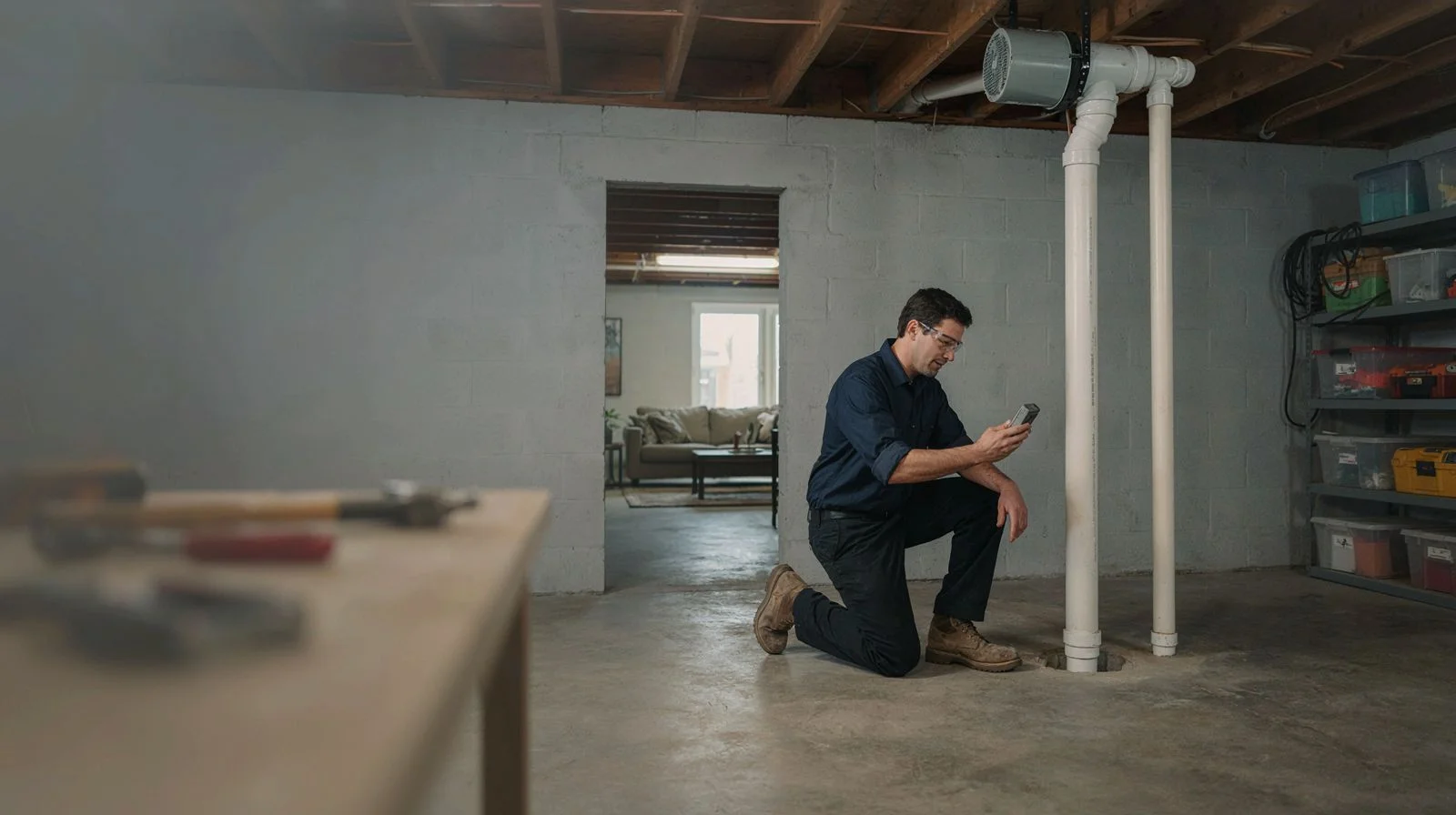
Most local installations use sub‑slab depressurization, creating a gentle vacuum under the concrete to redirect soil gases safely outdoors. On homes with crawlspaces, pros seal the soil with durable membrane and tie the crawlspace into the same vent system. If an older block wall shows high leakage, wall suction techniques can be considered to address air moving through the cores.
Installers evaluate where piping can run cleanly and discreetly. In many Emigsville homes, a tidy interior route from the basement to the garage or a rear corner of the house works well. When the garage has attic space, vent risers can continue up inside that space to exit at a high point, helping dispersal and keeping exterior lines minimal.
Vent and fan placement near familiar spots
Homes near John C. Rudy County Park often sit on open lots with steady winds, so pros choose a discharge location that clears rooflines and avoids re‑entry near upper windows. Along North George Street, where houses can be closer together, vent terminations are planned to respect setbacks and neighboring windows. Fans are located outside living areas - commonly on an exterior wall, in a garage, or in an attic space... to keep sound low and maintenance simple.
If your house is one of the historic properties close to the Emig Mansion, installers take extra care to preserve curb appeal. Routing may follow existing corners or downspouts, and paintable pipe sections help the system blend in while maintaining correct clearances.
What to expect during work
Before any drilling, crews protect finished floors and review the route with you. Core holes through the slab and rim joist are kept compact, and dust control is used at each step. Piping is secured neatly, penetrations are sealed, and electrical connections are coordinated so the fan has dedicated, reliable power that meets local code.
Once the system is running, technicians verify airflow and pressure at the suction point and check that the U‑tube manometer shows the right draw. Outdoor discharges are inspected for clearance from windows, doors, and soffit vents. Sump lids, if present, are sealed and remain accessible for future pump service.
After-install verification
A post‑mitigation radon test confirms the system is doing its job. Local pros place the device in the appropriate location for your layout and return for pickup or data retrieval after the required period. If results suggest further tuning; common in houses with additions or thick slabs - they’ll review options such as adding a second suction point or resizing the fan.
Ongoing ownership is straightforward. Keep the area around the exterior fan clear of leaves and snow, glance at the manometer monthly, and plan periodic retesting to track long‑term performance, especially after major weatherization or remodeling.
Weather and seasons in Emigsville
Cold months create stronger stack effect, which can increase radon entry in basements and first floors. During shoulder seasons, open windows may dilute readings; that’s why pros follow closed‑house conditions for testing. In summer, dehumidifiers running in finished basements can change air movement, so testing devices are placed away from registers and equipment for accurate numbers.
Real estate and home projects
For a sale in Emigsville, buyers and sellers often want objective test results and a tidy, documented system when mitigation is needed. Contractors provide labeling, fan model information, and a simple owner’s guide. If you’re planning a basement finish near Cousler Park or adding a sunroom, pros can coordinate rough‑ins so the vent path is ready before walls close.
Travel timing and scheduling confidence
Because Emigsville is only a short drive from central York, arrival windows are dependable even in busy seasons. Morning appointments often leave York via I‑83 North to Church Road, while afternoon visits may favor North George Street to avoid highway slowdowns. If a supply pickup is needed midday, crews can swing back to York and return without losing much working time, keeping your project moving.
Safety and transparency
Local contractors follow EPA and Pennsylvania DEP guidance for mitigation practices, use listed materials, and document the system’s airflow and pressure. You’ll know where each component is, how to read the manometer, and when to plan your next radon test. If the house layout changes down the road, the same team can review the system and recommend tweaks so performance stays consistent.
Our Services in Emigsville, PA
Typical radon mitigation cost in Emigsville, PA from independent local contractors (same as elsewhere in the York, PA area): $1,100 - $3,800. See typical radon mitigation costs near Emigsville, PA.
Why Emigsville, PA Chooses Radon Mitigation York PA
Local know‑how
Pros understand Emigsville basements, additions, and crawlspaces, and design systems that work with them; not against them.
Clear testing and results
You get dependable radon testing, straightforward explanations, and a documented post‑mitigation radon test so you know the numbers.
Neat, code‑aware installs
Piping is routed cleanly, fans are powered safely, and vent terminations respect clearances and neighboring homes.
Quiet, efficient systems
Fans and vent paths are chosen to reduce sound and visual impact while moving enough air to keep levels down.
Reliable scheduling
Short travel from York keeps arrivals predictable, whether crews use I‑83 to Church Road or head up North George Street.
Radon Mitigation FAQs in Emigsville, PA
How do radon mitigation pros reach Emigsville, PA from York, and which roads do they use near Church Road and North George Street?
Crews leave central York and typically take I‑83 North to the Church Road exit, then turn onto North George Street for neighborhood access. When traffic is light, they may drive North George Street from downtown through North York straight into Emigsville for a simple surface‑street route.
For homes near John C. Rudy County Park in Emigsville, PA, how is vent routing planned for radon mitigation?
Open lots near the park can see steady winds, so pros place the discharge high and clear of rooflines and upper windows to prevent re‑entry. They also avoid soffit intakes and choose a wall that keeps sound away from outdoor seating areas.
How is radon mitigation adapted for 1950s ranches and newer townhomes in Emigsville, PA with basements or partial slabs?
Ranches with full basements often use a central sub‑slab suction point to reach multiple slab sections. Newer townhomes may favor garage or attic piping to minimize exterior lines, and a second suction point can be added if an addition or thicker slab limits airflow.
Is radon testing recommended for homes on private wells around Emigsville, PA, and when would water testing be included with mitigation?
Air testing is the first step for every home, but if a property uses a private well on the edge of town, pros may suggest water testing to rule out radon entering through fixtures. If results indicate a concern, water treatment is planned alongside the air mitigation system.
What seasonal factors in Emigsville, PA affect radon testing and the timing of the post‑mitigation radon test?
Cold weather increases stack effect, so winter readings often run higher and make a good baseline for decisions. After a system is installed, the post‑mitigation radon test follows closed‑house rules and is timed to avoid unusual ventilation, like window‑open periods in spring or fall.
Are permits or electrical inspections required for radon mitigation in Emigsville, PA within Manchester Township?
Requirements can vary by project. Local contractors check current township rules and coordinate any needed electrical work with a licensed electrician so the fan has a compliant power source. They also label components and provide documentation for home records.
Contact Us Today for a Free Estimate
Free — no obligations