York, PA radon help you can trust
Radon Mitigation in Red Lion, PA
Local contractors serve Red Lion quickly from the York area. Testing and mitigation are tailored to your foundation and home layout.
Trusted radon help for Red Lion homes
Radon mitigation in Red Lion, PA matters because many homes here have basements and soils that allow gas to enter. Radon Mitigation York PA connects homeowners in Red Lion, PA with local radon mitigation pros who know the town’s streets, housing styles, and code expectations.
Based in York, PA, we match you with experienced contractors who handle radon testing, mitigation system design, and the post‑mitigation radon test. They work neatly, protect finished spaces, and explain the plan before any drilling or sealing begins.
Service coverage is available during daytime hours throughout the week. For scheduling and general questions, our office line is (223) 877-3977.
Red Lion, PA radon conditions
Red Lion’s mix of early‑ to mid‑20th‑century homes and later ranches often includes basements with block or stone walls, utility chases, and slab cracks where soil gases can find pathways indoors. The area’s underlying shales and siltstones, combined with tight winter conditions that keep houses closed up, can raise indoor concentrations. Many properties sit on gentle slopes, creating walkout basements and drain lines that also need sealing during system design. Pennsylvania broadly has elevated radon potential, so consistent testing and, when needed, mitigation is recommended for homes across York County EPA overview.
Reliable coverage for Red Lion
Radon Mitigation York PA connects Red Lion, PA homeowners with vetted radon professionals who work across the southeastern York area every week. From system design to clean installation and a post‑mitigation radon test, the matched contractors focus on clear communication and neat results that fit your home’s layout.
Getting from York to your neighborhood
Pros typically stage from 441 E. Market St., Suite 18202, York, PA 17403 in York, PA and head southeast toward Red Lion using familiar routes. A common path is E Market Street to Haines Road, then south on PA‑24 (South Queen Street/Cape Horn Road) into town. Depending on your exact address near Main Street, Fairmount Park, or Red Lion Area Senior High School, final turns use local streets to keep equipment close but out of the way.
Travel times vary with school traffic and weekend events around town, so crews plan arrivals to avoid busy periods near the high school and central intersections on Main Street. Parking is chosen to maintain sidewalk clearance and respect narrow side yards common near the borough center.
Home layouts we commonly see in Red Lion
- Older borough homes around Main Street often have fieldstone or block foundations with partial or full basements. Mortar joints, utility penetrations, and sump pits become key sealing points during mitigation design.
- 1950s–1970s ranches and split‑levels across the borough and nearby streets off PA‑24 typically sit on poured slabs or block basements. These benefit from sub‑slab depressurization with one or more suction points sized to the slab footprint.
- Walkout basements on sloped lots are common on the edges of town. Pros balance airflow between slab sections, crawlspaces, and additions to ensure even pressure across the whole footprint.
How mitigation systems are planned
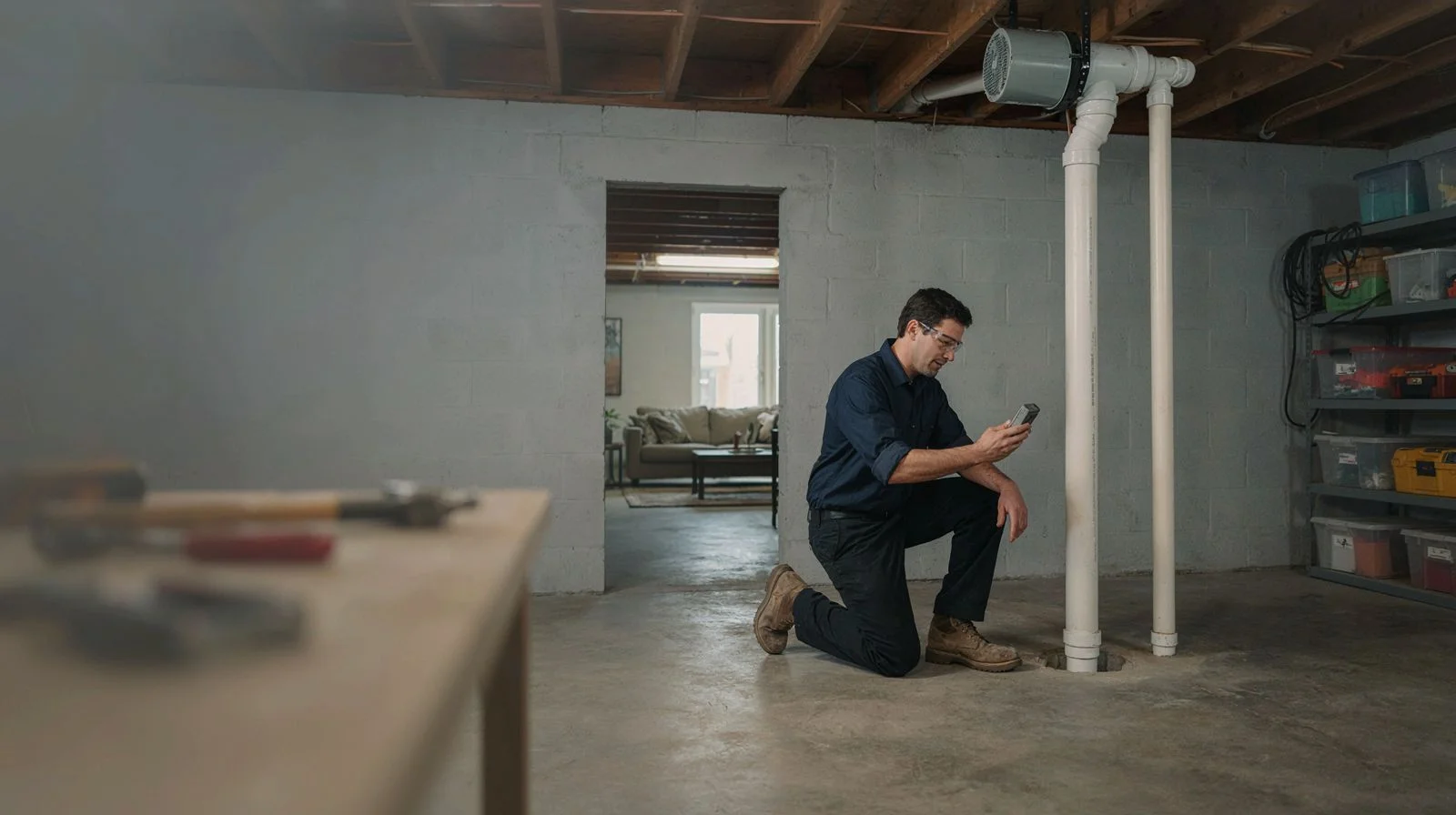
The local contractors begin with a short assessment: reviewing test results, tracing likely soil‑gas entry points, and noting slab thickness, drains, and any crawlspaces. Most homes in Red Lion are well served by a sub‑slab depressurization system. That means creating one or more suction points in the slab, sealing accessible cracks, and venting the collected soil gas safely above the roofline. Where a sump is present, it may double as a suction point with an airtight lid to preserve performance.
For additions on separate slabs, or where bearing walls split the footprint, the design can use multiple suction points or under‑membrane piping in a vented crawlspace. The goal is steady pressure field extension across the whole ground contact area, verified with small test holes during installation. This approach helps achieve and maintain results through seasonal changes.
Vent and fan placement that fits Red Lion streetscapes
In tighter blocks near Main Street, the matched pros look for discreet side or rear locations that still meet clearance guidelines from windows, doors, and eaves. Where alleys or narrow lot lines limit options, a vertical run may step back under soffits and exit above the roof to keep the exterior clean and out of view. On ranches and split‑levels off PA‑24, rear corners often allow a straight shot to the roofline with minimal elbows, improving airflow and reducing fan noise.
Neighbors and HOAs sometimes ask about appearance. Pros use clean, UV‑stable pipe, neatly strapped; where appropriate, they can color‑match exterior components so a system blends into siding. Fans are mounted outside or in a garage attic when feasible, with vibration isolation to keep living spaces quiet.
Power, weather protection, and durability
Fans need a dedicated, protected electrical connection. The contractors coordinate any licensed electrical work that’s required and place switches and service disconnects where inspectors can easily access them. To protect performance through York County winters, exterior runs are pitched to drain condensation, and discharge points clear typical snow lines and roof drift zones. Using exterior-rated components and proper sealing helps systems run reliably for years.
Radon testing and the post‑mitigation check
Before any drilling, many pros recommend a confirmatory short‑term test to verify current levels, especially if the original test is older or from another season. After installation, the system runs to stabilize indoor air, then a post‑mitigation radon test confirms results. Continuous radon monitors or approved lab kits may be used depending on availability and homeowner preference. Clear documentation is provided for your records and, if needed, real‑estate transactions.
For long‑term confidence, homeowners often plan periodic retesting, especially after major weatherization or HVAC changes. The EPA recommends testing every few years and after any significant renovation to ensure levels remain below the action threshold EPA guidance.
Working around Red Lion homes and yards
- Basement finishing and storage: Installers protect finishes, moveable shelving, and utilities, laying down floor protection and isolating work dust. Core drilling is localized and cleaned before crews leave.
- Sumps and drains: Where a sump is present, clear lids and gaskets keep the system airtight while preserving access. Pros also check for open French drains or daylighted lines and seal as needed to prevent air loss.
- Crawlspaces: In homes with partial crawl areas, a durable membrane and sealed seams prevent bypass air. This keeps suction strong under the entire footprint rather than pulling from the basement only.
- Noise and placement: Fan models are selected for the airflow your slab needs, not oversized. Proper sizing reduces hum and helps the fan last longer.
Water considerations on the outskirts
Some properties just outside the borough limits rely on private wells. Where high indoor readings are paired with well use, contractors may suggest water screening in addition to air testing to rule out waterborne radon as a contributor. If needed, point‑of‑entry treatments like aeration are considered alongside the primary sub‑slab system, with plumbing coordinated to maintain safe venting and drainage.
Scheduling and what to expect
Most installations fit within a day once design decisions are set, though complex foundations or multiple suction points can add time. Installers arrive with mats, HEPA vacs, and masonry tools, review the plan on arrival, and keep pathways clear for family and pets. At the end, you’ll see labeled piping, a manometer or monitor to check system draw, and simple guidance on what to watch for between scheduled tests.
Coverage across Red Lion, PA
Whether you’re near Fairmount Park, along Main Street in the borough center, or on residential streets not far from Red Lion Area Senior High School, the contractors we match you with work throughout town. From 441 E. Market St., Suite 18202, York, PA 17403, access via PA‑24 makes it straightforward to reach addresses across Red Lion and nearby neighborhoods without long lead times. If your driveway or alley is tight, crews can stage from the street and hand‑carry components to reduce disruption.
Transparent next steps
Every home is different. The matched pros assess foundation type, slab size, and airflow needs to shape a right‑sized plan. If you’d like a general sense of what drives pricing before a visit, see radon mitigation costs in Red Lion. Written documentation of test results and system details is provided once the post‑mitigation check confirms performance.
Our Services in Red Lion, PA
Typical radon mitigation cost in Red Lion, PA from independent local contractors (same as elsewhere in the York, PA area): $1,100 - $3,800. See typical radon mitigation costs near Red Lion, PA.
Why Red Lion, PA Chooses Radon Mitigation York PA
Local know‑how
Contractors regularly work in Red Lion and know how to route vents cleanly on borough lots and newer subdivisions off PA‑24.
Right‑sized systems
Designs are based on your slab and airflow needs, not a one‑size approach, for quieter fans and steady results.
Clean, respectful work
Pros protect floors and finishes, contain dust during drilling, and leave clear labels and simple system instructions.
Clear testing and reports
From initial testing guidance to the post‑mitigation radon test, you receive documented results suitable for home records or a sale.
Coordinated permits
If an electrical permit or inspection is required, the matched contractors coordinate licensed work and schedule steps with local officials.
Radon Mitigation FAQs in Red Lion, PA
How do local pros travel from to radon mitigation jobs in Red Lion, PA, and which routes are most direct near PA‑24?
Installers typically leave York, PA via E Market Street, turn onto Haines Road, and continue south on PA‑24 into Red Lion. Near the borough center, they use Main Street and nearby side streets to park safely without blocking alleys or sidewalks.
Do homes near Fairmount Park or along Main Street need special vent placement for radon mitigation in Red Lion, PA?
Lots near the park and along Main Street can have closer setbacks and foot traffic. Pros usually place vents along rear or side elevations, keeping required clearances from windows and routing to the roofline so systems are effective yet unobtrusive.
For mid‑century ranches and split‑levels in Red Lion, PA with block basements, how is radon mitigation adapted?
Many mid‑century homes have multiple slab sections or bearing walls that divide airflow. Contractors map pressure zones, add suction points where needed, and seal accessible joints so the system pulls evenly under the entire footprint.
Is well water radon testing recommended with radon mitigation in Red Lion, PA, especially for homes toward Winterstown Road?
On the outskirts where private wells are more common, a water screen can help rule out waterborne radon as a contributor. If elevated, pros may pair point‑of‑entry water treatment with the primary sub‑slab system for complete reduction.
What seasonal factors in Red Lion, PA affect radon testing and the post‑mitigation radon test?
Winter’s closed‑house conditions often produce higher readings, while summer ventilation can lower them. Contractors consider season, recent weather, and HVAC operation when planning initial testing and scheduling the post‑mitigation test after the system stabilizes.
Are permits or electrical inspections required for radon mitigation in Red Lion, PA?
Requirements can vary by jurisdiction. Local contractors confirm details with the borough or township before work and, when an electrical permit or inspection is needed for the fan circuit, they coordinate a licensed electrician and the visit from the inspector.
Contact Us Today for a Free Estimate
Free — no obligations