York area radon specialists
Radon Mitigation in Dover Township, PA
Fast scheduling, tidy installs, and clear test results from local pros who know Dover Township homes.
Radon help for Dover Township homes
Radon mitigation in Dover Township, PA is a smart step for many homes, and Radon Mitigation York PA connects homeowners in Dover Township, PA with local radon mitigation pros who do the work right. From radon testing to system installation and a post-mitigation radon test, you get clear guidance based on your home’s layout and foundation.
We serve the York area from York, PA and coordinate convenient appointment windows during normal business hours. Office hours are 9 AM–5 PM, seven days a week; for scheduling or questions, reach us at (223) 877-3977.
Every house is different, so matched contractors look at your slab, crawlspace, or basement, plan a route that looks clean from the street, and size the fan for stable, long‑term performance. You’ll get plain-language results and a plan that makes sense for your address.
Radon factors in Dover Township, PA
York County is mapped by the EPA as a high radon potential Zone 1 area, which means many Dover Township homes can test at or above the action level, especially those with basements or partially finished lower levels. Split‑levels, ranches, and newer slab‑on‑grade homes here often have multiple foundation sections or tight soil that limit natural sub‑slab airflow, so professionally designed sub‑slab depressurization is important for consistent results. Seasonal heating cycles and closed-house conditions in winter can drive levels higher, so confirming reductions with a post‑mitigation radon test is essential. See guidance on risk and testing from the EPA’s radon zone resources EPA radon zones.
Serving homes across Dover Township
Dover Township blends established neighborhoods with open, rural stretches, so no two projects look the same. Whether your home sits along Carlisle Road (PA‑74), near Lehr Park, or off Davidsburg Road, local pros design systems that fit your foundation and keep the exterior tidy. Our network supports full-service radon testing, radon mitigation, and the required post‑mitigation radon test to document the reduction.
How we reach you from York
Teams stage from 441 E. Market St., Suite 18202, York, PA 17403 in downtown York and typically head west across the city before turning north toward Dover Township. In light traffic, the most direct path is west on Market Street to Carlisle Avenue (PA‑74), then continuing on PA‑74 into the township. Depending on your exact address, drivers may use Roosevelt Avenue to US‑30 westbound and then rejoin PA‑74, or cut across local connectors to reach side roads like Davidsburg Road. These options help avoid congestion near the urban core and keep arrival windows reliable.
Once in Dover Township, crews navigate neighborhood streets with an eye for driveway access and a safe spot to stage tools. Addresses close to Lehr Park or just off PA‑74 are straightforward; more rural sites may involve longer private drives or outbuildings. Either way, the installation plan accounts for fan placement, exterior vent routing, and power access without disrupting daily routines.
Testing that fits Dover Township floor plans
Accurate testing guides every decision. For homes with basements, devices are placed in the lowest livable area away from drafts and direct sunlight. For slab‑on‑grade ranches common along PA‑74 and surrounding subdivisions, tests are set in frequently used rooms on the slab level. When additions or sunrooms sit on separate slabs, pros may test multiple zones to understand how air moves under each section before recommending a single or multi‑point mitigation layout.
If you’ve never tested, short‑term monitors offer a quick read under closed‑house conditions. If you already have a result near the action level, matched contractors can install mitigation and follow up with a post‑mitigation radon test to confirm performance once the system has run continuously for the recommended period.
Mitigation options that work with your foundation
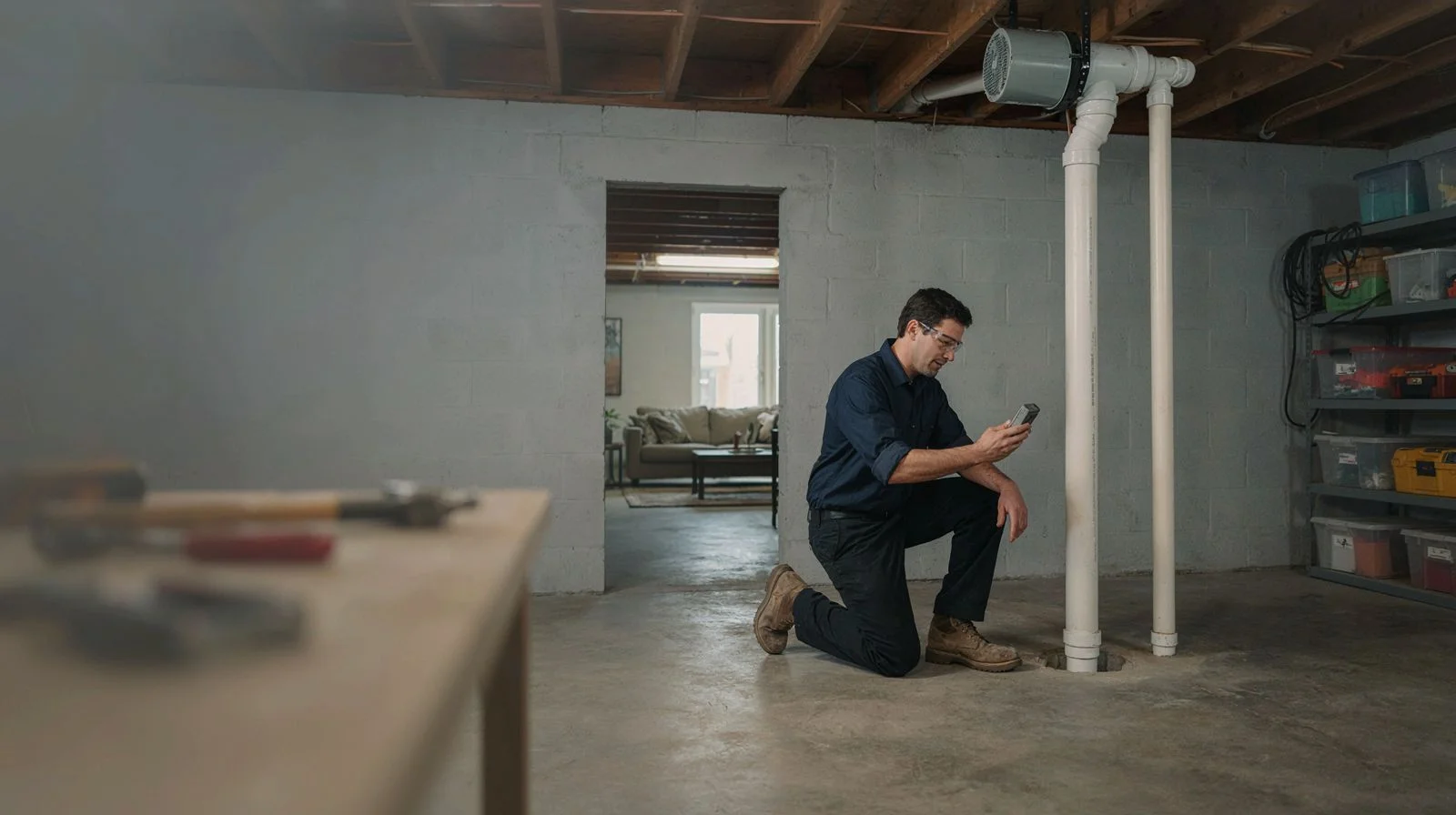
The most common approach is sub‑slab depressurization (SSD). Crews core a discrete suction point in the slab, seal it cleanly, and run PVC to an exterior radon fan that draws soil gases out above the roofline. For basements with thicker, older concrete or stone sections, installers may add a second suction point or use interior trunking to reach the best collection spot. Where a crawlspace exists, a sealed membrane with sub‑membrane depressurization ties into the main stack for balanced airflow.
On homes near Davidsburg Road with finished basements, pros often route the stack behind landscaping or along a rear elevation to preserve curb appeal while still meeting clearances. For newer two‑stories on slabs, the layout might place the fan at the side elevation with a vertical run to the eave, keeping penetrations minimal and drainage paths intact.
Thoughtful fan placement and exterior routing
Noise and appearance matter. Installers select fan models and mounting locations to reduce vibration and keep sound outside bedrooms or quiet spaces. Brackets, sleeves, and weather‑resistant fittings help the system look intentional, not improvised. Electrical work is handled to code with an exterior‑rated disconnect and proper bonding. Where attic routes are feasible, pros can hide much of the piping indoors and exit at the roof with a neat termination that meets clearances.
After installation: post‑mitigation test and care
Once the system is running, the post‑mitigation radon test verifies the reduction under normal living conditions. Contractors place the device in the same general location as the original test for a fair comparison. You’ll receive written results and simple system care notes, such as checking the manometer or indicator and keeping snow and debris away from the exhaust.
For long‑term confidence, many Dover Township homeowners retest seasonally or after major changes like finishing a basement, replacing windows, or altering HVAC balance. Fans are designed for continuous duty, and replacements are straightforward if one eventually wears out. If levels shift due to soil moisture or home alterations, pros can add a suction point or tune the system to restore performance.
What affects timelines in Dover Township
Access and power determine much of the schedule. Homes close to Carlisle Road (PA‑74) or near Lehr Park generally allow easy parking and shorter material runs. Rural addresses with a crawlspace or mixed foundations may need extra sealing and coordination. Weather also plays a part; heavy rain or freezing conditions can slow exterior sealing or roof work. Installers plan around these realities and keep you informed about staging, noise, and any brief power interruptions for electrical tie‑ins.
Coverage near key roads and landmarks
From 441 E. Market St., Suite 18202, York, PA 17403, crews regularly serve addresses throughout Dover Township, including neighborhoods off PA‑74, pockets near Lehr Park, and side roads linking toward Davidsburg Road. The route mix; Market Street to PA‑74, or US‑30 to PA‑74; helps maintain consistent arrival windows across the township. If you’re further west or north toward more rural stretches, plans simply allow a bit more travel time and staging so work begins smoothly upon arrival.
Services available: radon mitigation, radon testing, and the post‑mitigation radon test. Installers explain options clearly, size the fan to your home, and document results so you have a solid record for peace of mind or a future home sale. If pricing is a deciding factor, see radon mitigation cost details for Dover Township, PA for general guidance; final pricing depends on your home’s design and the scope of work.
Our Services in Dover Township, PA
Independent local contractors in Dover Township, PA typically charge $1,100 - $3,800 for radon mitigation, the same as across the York, PA area. See what radon mitigation costs in Dover Township, PA.
Why Dover Township, PA Chooses Radon Mitigation York PA
Local Dover Township know‑how
Pros understand soil, basements, and wind exposure along PA‑74 and nearby roads, so systems are planned for steady, year‑round performance.
Vetted radon specialists
Homeowners are matched with contractors who focus on radon testing, mitigation, and post‑mitigation verification, not general handymen.
Neat, code‑compliant installs
Clean core drilling, sealed penetrations, proper electrical, and weather‑rated venting keep your home safe and the exterior uncluttered.
Clear testing and results
You get straightforward test placements, written reports, and a plan that explains why each choice fits your foundation and layout.
Respect for your home
Floor protection, careful routing, and tidy cleanup are standard so your spaces look the same or better when work is finished.
Straightforward pricing guidance
Recommendations are based on your home’s needs, with options explained up front so you can choose confidently.
Radon Mitigation FAQs in Dover Township, PA
How do radon mitigation crews reach Dover Township, PA from, and which routes are most reliable?
Teams usually travel west through York and continue on Carlisle Avenue/PA‑74 into Dover Township. Depending on traffic, they may also use Roosevelt Avenue to US‑30 before reconnecting with PA‑74. Side streets are chosen based on driveway access and parking.
Do homes near Lehr Park or along Davidsburg Road need special vent placement for radon mitigation in Dover Township, PA?
Wind exposure and lot orientation near open park spaces can influence where a stack performs best. Pros typically route vents away from windows and common outdoor areas while meeting height clearances, and position the fan where noise is least noticeable indoors.
For 1970s ranches and newer two‑story homes on slabs in Dover Township, PA, how is radon mitigation adapted?
Ranches often work well with a single suction point near the center of the slab and a short, efficient pipe run. Larger or multi‑slab footprints may benefit from a second suction point or interior trunking to reach isolated sections for balanced airflow.
Is well water radon testing recommended with radon mitigation in Dover Township, PA?
Where private wells are used, water testing is a sensible add‑on because radon can enter through both soil and water. If results show elevated waterborne radon, pros can discuss treatment options alongside the air mitigation plan.
What seasonal factors in Dover Township, PA affect radon testing and the post‑mitigation radon test?
Closed‑house winter conditions and frequent heating use can raise indoor radon, making winter a common time to see higher readings. After installation, the verification test is scheduled under normal living conditions so results reflect everyday use rather than a brief weather event.
Are permits or electrical inspections required for radon mitigation in Dover Township, PA?
Requirements vary with the scope of electrical work. When a new exterior‑rated outlet or circuit is added, contractors follow Pennsylvania electrical code and coordinate with the local authority for any needed inspection to confirm safe installation.
Contact Us Today for a Free Estimate
Free — no obligations