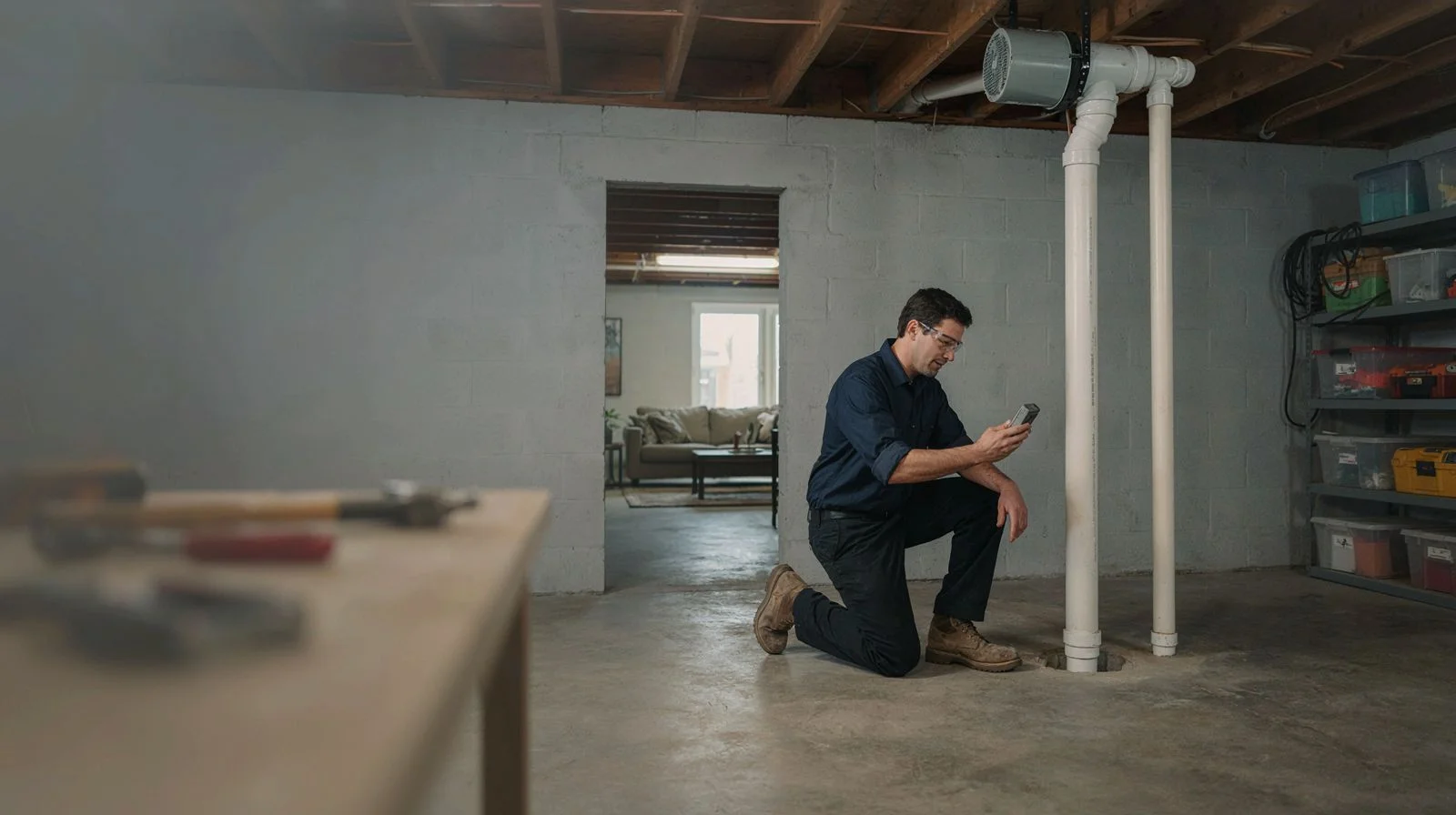
York, PA radon specialists
Radon Mitigation in York County, PA
Testing and proven systems for safer air across the county. Local pros design clean, quiet solutions for basements, slabs, and crawlspaces.
Trusted help for York County homes
Radon mitigation in York County, PA matters because many homes here have basements and soils that allow gas to enter living spaces. Radon Mitigation York PA connects homeowners in York County, PA with local radon mitigation pros who test, design, and install systems that fit the house.
Our office is in York, PA, and we dispatch across the county for radon testing, mitigation, and the follow‑up post‑mitigation radon test. Office hours are 9 AM–5 PM daily at (223) 877-3977.
Every property is different. Local contractors consider your foundation type, sump or drain tiles, and the best vent path to keep the system quiet and discreet. The goal is stable, low radon levels confirmed by a proper post‑install test.
Whether you live in a brick rowhome in the city, a ranch in the suburbs, or a farmhouse on acreage, the matched pros focus on neat workmanship, code‑aware electrical connections, and clear documentation for real estate or peace of mind.
York County, PA conditions that drive radon work
York County, PA sits on varied bedrock and soils common to south‑central Pennsylvania, including shale, sandstone, and limestone that can release radon into basements and slabs. Many homes have full or partial basements, block walls, or fieldstone foundations that allow soil gas entry through joints, sump pits, and cracks. Newer tight‑envelope construction can also trap radon once it enters. Winter stack effect, closed‑house conditions, and long heating seasons often push levels higher. The Pennsylvania Department of Environmental Protection notes that elevated radon can be found in any county in the state, making testing and, when needed, mitigation a prudent step for homeowners PA DEP radon guidance.
Serving York County from downtown York
From our office at 441 E. Market St., Suite 18202, York, PA 17403 in York, PA, local crews reach homes across York County, PA quickly. East Market Street connects to major routes in minutes, making it straightforward to cover the city, suburbs, and rural areas. Heading west toward Hanover typically follows US‑30 then PA‑116. Southbound work near Shrewsbury or New Freedom usually uses I‑83. For Red Lion, Windsor, and neighborhoods along PA‑24, pros often take East Market/PA‑462 to PA‑24. Northbound trips toward Dover Township or Wellsville commonly follow PA‑74, while work near Wrightsville and riverfront areas is reached via US‑30 across to the Susquehanna corridor.
Accurate radon testing informs the plan
Testing is the starting point. Local pros place devices on the lowest livable level under closed‑house conditions, following current guidance so results reflect the home’s typical exposure. For time‑sensitive situations like a pending sale, they use calibrated continuous monitors that produce clear reports. In other cases, short‑term devices may be appropriate, and long‑term testing can be recommended when seasonal swings are a concern. Solid measurements guide design decisions, from how many suction points are needed to the size of the fan and the best vent route EPA homeowner guidance.
Mitigation tailored to York County homes
York County housing ranges widely; from 19th‑century farmhouses with stone foundations to split‑levels and newer construction in suburban developments. Technicians choose methods that match those structures:
- Sub‑slab depressurization for concrete slabs and most basements, creating a gentle vacuum under the floor to keep soil gas out.
- Drain‑tile integration when a perimeter drain or sump is present, using existing pathways to spread suction more evenly.
- Crawlspace sealing with membrane and a dedicated fan when exposed soil is the main entry point.
On large footprints, multiple suction points or interior trenching can even out pressure field extension. Where slabs are thick, coring is done carefully to preserve structural integrity, and patching is neat, flush, and paint‑ready.
Quiet, clean vent routing
Good design keeps the system effective and unobtrusive. In many York County, PA homes, the preferred vent path runs through a garage or up to the attic to discharge above the roofline, keeping the fan outside living spaces and reducing exterior visual impact. Where exterior routing is the better choice, installers select locations away from windows and eaves, match pipe color to siding when possible, and use tidy supports. In areas that see strong winter winds, such as hilltops near Rocky Ridge County Park, pros secure terminations and consider condensate management to avoid icing. Sumps receive gasketed lids with view panels, and any penetrations are sealed for an airtight finish.
Electrical and weather considerations
A reliable system needs a safe power source. Technicians verify an outlet or install a dedicated, code‑aware connection for the radon fan in coordination with a licensed electrician when required. Outside, components are placed with local weather in mind; above typical snow lines, with condensate drains sloped to prevent freeze‑ups. In neighborhoods near Codorus State Park and Lake Marburg where groundwater can spike after storms, sump covers and check valves are inspected so mitigation works in tandem with drainage, not against it.
Post‑mitigation verification you can trust
Once the system is running and airflow is confirmed on the gauge, local pros allow a brief stabilization period, then perform a post‑mitigation radon test using recognized protocols. Results are documented in a clear report. If follow‑up adjustments are warranted; such as increasing fan capacity or adding a second suction point on a far wing - those are planned promptly so results hold steady through the seasons.
Working across the county’s roads and landmarks
York County, PA is spread out, but it’s easy to cover efficiently from the city core. Jobs near the York Expo Center and neighborhoods off Carlisle Avenue are reached via local streets and US‑30. Properties in Red Lion or Windsor are commonly accessed along PA‑24. West‑side addresses near Codorus State Park and rural routes toward Spring Grove and Hanover are reached on PA‑116 and connecting back roads that avoid heavy commuter congestion. East‑side homes in Wrightsville and along the river hills are often served via US‑30, with care taken for steep driveways and vent heights near tall eaves common in hillside homes.
Neat workmanship and homeowner communication
Homeowners appreciate quiet operation and a clean look. Pros lay down floor protection, core carefully to minimize dust, and route piping tight to corners for a low‑profile appearance. Before drilling, they confirm appliance clearances, locate utilities, and review the planned vent path so there are no surprises. After installation, they label the system, show how to read the pressure gauge, and leave testing instructions in writing. For real estate, they can provide documentation summarizing test results and system details for the buyer’s records.
Systems built for long‑term reliability
Fans are continuous‑duty components designed to run quietly for years. The team selects models sized to your home’s pressure characteristics, not just a one‑size‑fits‑all approach. Exterior pipe joints are solvent‑welded and supported to handle freeze‑thaw cycles. Where sunlight exposure is strong, UV‑resistant materials and paint are used to help the system age well. Homeowners are encouraged to glance at the gauge monthly and retest at recommended intervals or after major renovations that change airflow patterns.
Transparent planning and next steps
Scope depends on slab size, sub‑slab fill, presence of drain tile, and how easily suction can spread under the floor. That’s why pros measure, drill pilot holes where helpful, and listen for under‑slab airflow before finalizing locations. If you’re comparing options, pricing depends on the home’s specifics and any electrical needs; see radon mitigation costs in York County.
Getting to you quickly from our York office
Starting at 441 E. Market St., Suite 18202, York, PA 17403, crews use East Market Street to reach US‑30 for westbound and eastbound projects, or jog a few blocks to pick up I‑83 for north‑south travel. This keeps travel times predictable during weekday work hours and helps schedule installations and tests across multiple addresses in the same area. Whether you live near Heritage Rail Trail County Park, in established neighborhoods off PA‑74, or out by farmland between Hanover and Spring Grove, the route planning aims to arrive on time with everything needed for a clean, same‑day installation in most homes.
Our Services in York County, PA
York County, PA radon mitigation pricing from independent local contractors matches the rest of the York, PA area: $1,100 - $3,800. See York County, PA radon mitigation pricing.
Why York County, PA Chooses Radon Mitigation York PA
Local know‑how
Pros understand York County soils, basements, and weather, so systems are designed to stay effective through seasonal swings.
Test‑driven decisions
Measurements guide the plan. Accurate testing determines suction points, fan size, and vent routing for consistent results.
Clean, quiet installs
Fans are placed outside living spaces and vent runs are kept tidy and discreet to blend with the home.
Clear documentation
You receive straightforward reports for radon testing and post‑mitigation results, helpful for real estate or long‑term records.
Reliable components
Systems use proven materials and continuous‑duty fans, selected to match your home’s pressure conditions for lasting performance.
Radon Mitigation FAQs in York County, PA
Do radon mitigation results vary between river‑valley homes near Wrightsville and higher elevations around Rocky Ridge County Park in York County, PA?
Yes. Homes along the Susquehanna river hills can have stack‑effect winds and steep rooflines that affect vent placement, while hilltop homes may see stronger winter pressure differences. Local pros size fans and set discharge heights to suit each setting.
For older farmhouses with fieldstone foundations in rural York County, PA, how is radon mitigation adapted?
Installers often seal accessible joints, add a membrane in dirt‑floor crawlspaces, and use multiple suction points to spread vacuum under irregular floors. Drain‑tile connections are used when present, and vent paths are planned to preserve historic exteriors.
When traveling from to radon mitigation jobs in Hanover or Red Lion in York County, PA, which routes do local pros use?
Hanover jobs typically use US‑30 to PA‑116, while Red Lion work commonly follows PA‑462 to PA‑24. These routes help crews arrive during daytime hours without cutting through narrow residential streets.
Do homes near Codorus State Park or Lake Marburg in York County, PA need special moisture or venting considerations for radon mitigation?
Properties around the lake can have active sumps and higher groundwater after storms. Pros fit gasketed sump lids, check valves, and plan condensate handling and vent height to keep the system running smoothly in wet conditions.
For split‑level houses common around Dallastown and Springettsbury Township in York County, PA, how is radon mitigation planned?
Split‑levels may need separate suction points for lower slabs or additions. Technicians test communication between levels, then locate piping to keep the system balanced and quiet without crowding finished spaces.
Are permits or electrical inspections required for radon mitigation in York County, PA?
Requirements vary by municipality. Many townships review only the electrical connection when a new circuit is added, and local pros coordinate with the township or an electrical inspector if an inspection is needed. Homeowners receive any final documentation after approval.
Contact Us Today for a Free Estimate
Free — no obligations