York area radon help
Radon Mitigation in Ephrata, PA
Testing, mitigation, and post‑mitigation checks for homes across Ephrata. Local pros design low‑profile systems that fit your house and meet guidelines.
Reliable radon help for Ephrata homes
Radon mitigation in Ephrata, PA starts with clear testing and a plan that fits your home. Radon Mitigation York PA connects homeowners in Ephrata, PA with local radon mitigation pros who install and service systems the right way. Our York, PA office coordinates scheduling during regular hours; reach us at (223) 877-3977 with questions about coverage and availability.
You’ll be matched with nearby professionals for radon testing, full radon mitigation, and the post‑mitigation radon test. They focus on simple explanations, neat installations, and results that bring indoor radon below recommended guidelines. Whether your house has a finished basement, a crawlspace, or a mix of slabs, they tailor the approach to your structure.
Ephrata, PA home conditions and radon
Ephrata, PA has a mix of older borough homes, mid‑century ranches, and newer developments, many with basements or partial slabs that can draw soil gas into living spaces. Parts of Lancaster County sit over limestone and shale formations that can allow radon to travel through soil and foundation cracks, making testing and mitigation important for both older foundations and tight newer builds. Winter heating and closed‑house conditions can increase levels, while seasonal water management and sumps add airflow paths that need sealing and routing. State and federal guidance recommend testing all homes and reducing levels at or above 4.0 pCi/L EPA radon zones.
Serving Ephrata with local pros
Ephrata, PA is a regular service area for the radon professionals partnered with Radon Mitigation York PA. Scheduling and dispatch are coordinated from our York, PA office at 441 E. Market St., Suite 18202, York, PA 17403. From there, the most direct route typically runs east on US‑30 toward Lancaster and then north on US‑222 to Ephrata, with final access along PA‑322 (Main Street) into neighborhoods across the borough and township. This corridor allows installers to plan timely arrivals and bring the right equipment for testing and installation.
Coverage across Ephrata
Local teams work throughout the borough and nearby streets in Ephrata Township, including homes along PA‑322 (Main Street), areas near the historic Ephrata Cloister, and neighborhoods around the Green Dragon Farmers Market. Whether your property sits on a quiet side street with an older stone foundation or a newer cul‑de‑sac with poured concrete slabs, the system design is matched to the structure and soil conditions found right on your lot.
How a system is planned for Ephrata homes
Every property starts with a review of foundation types, slab thickness, sump or drain‑tile details, and the routes available for a discrete vent stack. In older borough homes, pros often encounter fieldstone or block walls and legacy basement patches. These are evaluated for sealing and suction point placement that won’t compromise the integrity of the foundation. In newer construction, they check for any passive radon rough‑in and determine whether an active fan upgrade will achieve the target airflow and pressure field under the slab.
Vent routing that respects curb appeal
Along Main Street and close to landmarks such as the Ephrata Cloister, many homeowners prefer a low‑visibility installation. Installers look for attic terminations or roof penetrations that keep the exterior profile clean, where practical. If an outside run is best for performance, components are tucked along rear or side elevations, with paint‑matched pipe and neat supports to blend with siding.
Working around basements, slabs, and mixed crawlspaces
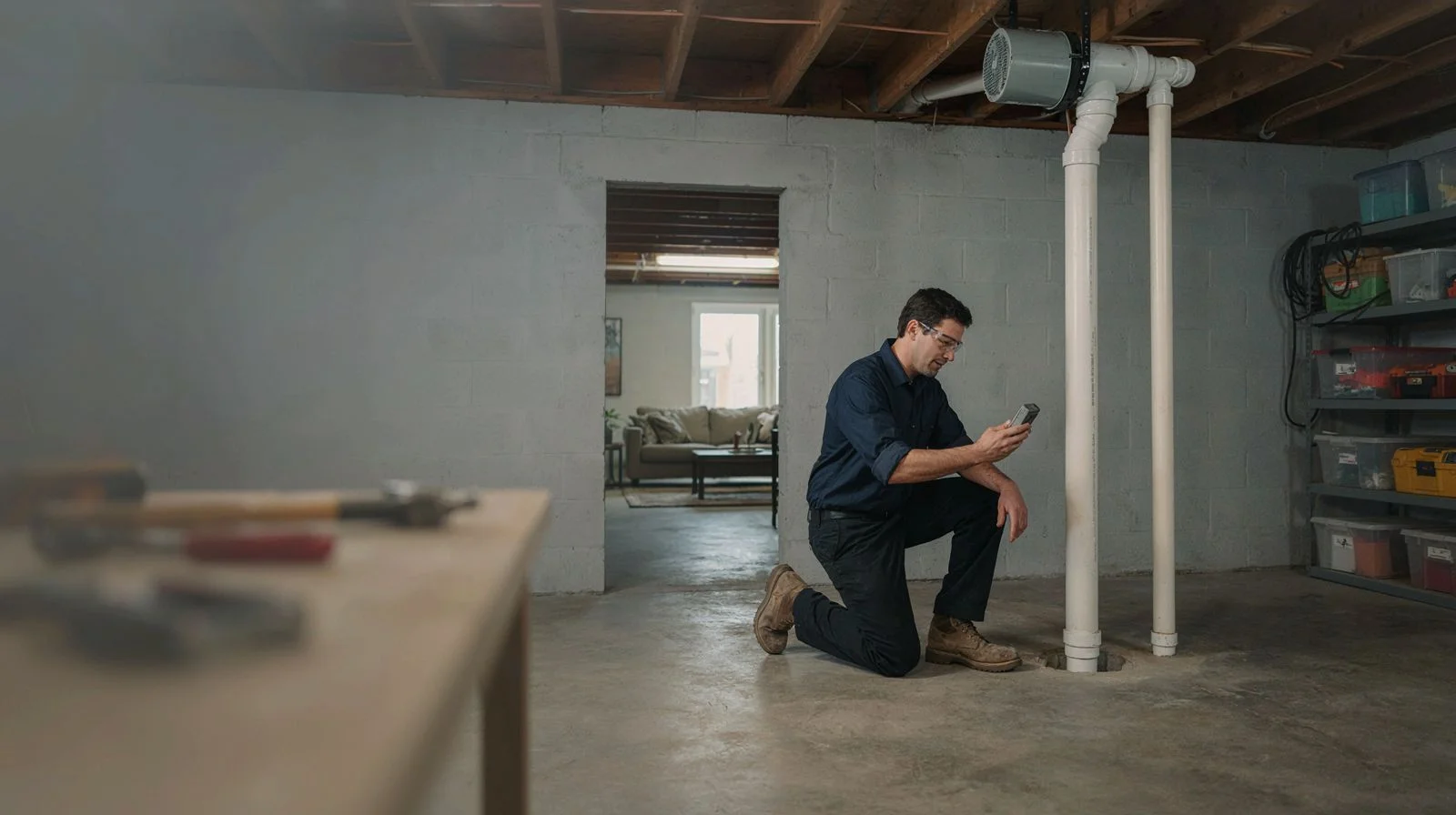
Radon mitigation is adapted to how your home is built. For full basements, a sub‑slab depressurization system is the standard approach, using one or more suction points connected to a PVC riser and a properly sized fan to draw soil gas safely above the roofline. For mixed crawlspaces and partial slabs common in some Ephrata homes, pros combine sub‑membrane techniques under sealed polyethylene in the crawl with sub‑slab suction on the hard floor area. Sumps and perimeter drains are sealed with clear, serviceable lids so water management keeps working while radon pathways are controlled.
Quiet, effective fans and controls
Fans are selected to match the resistance of your sub‑slab material so the system moves just enough air to create a consistent vacuum field without excess noise. Exterior fans are mounted on vibration‑dampening brackets, with electrical disconnects and weather‑rated components. Indoors, manometers or digital indicators provide a quick visual check that the system is operating. This balance of performance and comfort helps keep living spaces quiet while maintaining mitigation levels that meet guidance.
Radon testing and verification
Local pros begin with measurement. Short‑term testing under closed‑house conditions gives a clear baseline, and in some cases long‑term devices follow to confirm seasonal patterns. After installation, a post‑mitigation radon test verifies that the system is performing. Results are documented so you can share them with future buyers or keep them on file for your records. For a deeper look at system approaches, see the EPA’s overview of reduction methods.
Electrical and safety coordination
Where electrical work is needed for a fan circuit, licensed electricians handle wiring to meet code requirements. This can include a dedicated exterior disconnect, proper circuit protection, and sealed penetrations. Penetrations in fire‑rated areas are addressed with appropriate materials, and outside terminations are installed to maintain clearances from windows and soffits according to manufacturer and best‑practice guidance. The goal is a safe, compliant setup that lasts.
What to expect during installation
Before tools come out, you’ll see a simple plan showing where the suction point, fan, and discharge will go and how they’ll look on your house. Dust and noise are minimized with careful coring, vacuum collection, and tidy routing. Pros keep slab holes as small as practical, seal joints neatly, and label exterior components. After the fan starts, they check pressure at test points and confirm airflow before sealing up and cleaning the work area.
Homes near markets, schools, and parks
Ephrata has a variety of lot sizes and rooflines, from compact borough parcels near the Ephrata Cloister to roomier sites toward the Green Dragon Farmers Market area. Each setting affects where a riser can travel and where a fan can be placed without affecting daily use of patios, play areas, or driveways. Installers plan routing to avoid snow slide zones, high‑traffic walkways, and landscape features, keeping maintenance access simple.
Maintenance and long‑term confidence
After a successful post‑mitigation radon test, the system should continue to operate with only periodic checks that the indicator shows normal operation. Fans are long‑lived components, but like any mechanical part, they may eventually need replacement. If levels change due to renovations, foundation work, or drainage updates, retesting helps keep you informed so adjustments can be made. When budgeting or comparing approaches, pricing depends on your home’s layout and system complexity; see radon mitigation costs in Ephrata for general guidance.
Getting here and scheduling windows
Arrivals are planned from 441 E. Market St., Suite 18202, York, PA 17403 using US‑30 East and US‑222 North into Ephrata, with side‑street access along PA‑322 for most neighborhoods. This routing helps teams estimate windows around school traffic and market days so you know when to expect the crew. If a delivery window shifts due to weather or roadwork, updates are shared promptly so the day stays predictable.
Our Services in Ephrata, PA
Independent local contractors in Ephrata, PA typically charge $1,100 - $3,800 for radon mitigation, the same as across the York, PA area. See what radon mitigation costs in Ephrata, PA.
Why Ephrata, PA Chooses Radon Mitigation York PA
Local routes that save time
Installers stage from the York, PA hub and use US‑30 and US‑222 to reach Ephrata efficiently, helping appointments start on time.
Tailored system design
Every plan matches your foundation, soil, and layout, from full basements to mixed crawlspaces, for steady, reliable radon reduction.
Neat, low‑profile installs
Fans, piping, and penetrations are placed to blend with your home, with clean sealing and labeled components for easy checks.
Clear testing and results
Pros handle baseline testing and the post‑mitigation radon test, then provide straightforward documentation you can keep or share.
Code‑minded electrical work
Licensed electricians manage fan power and safety devices so the system meets code and runs reliably through the seasons.
Responsive scheduling
Office-based coordination keeps you informed on arrival windows and routing, with updates if traffic or weather require changes.
Radon Mitigation FAQs in Ephrata, PA
How do local pros travel from to radon mitigation jobs in Ephrata, PA, and which routes are most direct near US‑222 and Main Street?
Scheduling is coordinated from the York, PA office, and installers typically head east on US‑30 and then north on US‑222 to Ephrata. Final access into neighborhoods is usually along PA‑322 (Main Street) or nearby connectors, which keeps arrival windows predictable.
For older borough houses near the Ephrata Cloister or along PA‑322, how is radon mitigation in Ephrata, PA planned to protect curb appeal?
Designers look for attic or rear‑elevation terminations to keep piping discreet on homes in these visible areas. Where an exterior run is best for performance, components are paint‑matched and aligned carefully to blend with siding and trim.
Do homes around the Green Dragon Farmers Market area need a different approach to radon mitigation in Ephrata, PA?
Many homes near that area have a mix of basements and crawlspaces, so plans often combine sub‑slab suction with sealed sub‑membrane work. Sumps or drain tile are sealed with serviceable lids so water control continues while radon pathways are closed.
Is well water radon testing recommended with radon mitigation in Ephrata, PA for properties in Ephrata Township?
If your home uses a private well, adding water testing can help rule out radon introduced from groundwater. When waterborne radon is present, pros address air mitigation first and then discuss water treatment options if levels call for it.
What seasonal factors in Ephrata, PA affect radon testing and the post‑mitigation radon test?
Winter heating and closed‑house conditions can raise radon levels, making it a useful time to measure baseline performance. In humid summers, fans run continuously, and post‑mitigation testing verifies the system holds levels down across seasons.
Are permits or electrical inspections required for radon mitigation in Ephrata, PA within the borough or township?
Requirements can vary by jurisdiction and by the specifics of the electrical work. Local pros coordinate any needed permits and inspections and install components to meet current code and manufacturer guidance.
Contact Us Today for a Free Estimate
Free — no obligations