York area radon specialists
Radon Mitigation in Marietta, PA
Testing, mitigation, and post-mitigation checks for homes along the Susquehanna. Simple plans, clear communication, and clean installs.
Reliable radon mitigation in Marietta, PA
Radon mitigation in Marietta, PA matters for river-valley homes, and Radon Mitigation York PA connects homeowners in Marietta, PA with local radon mitigation pros. Whether you need radon testing, a new system, or a post-mitigation radon test, we match you with contractors who work here regularly.
Based in York, PA, we coordinate efficient scheduling across the river so projects in Marietta move quickly and smoothly. Office hours are 9 AM–5 PM, seven days a week, and the main line is (223) 877-3977.
The matched pros understand historic basements, mixed slabs, and crawlspaces common around town. They design systems that fit your home, follow proven methods, and aim for durable, neat results.
Radon conditions in Marietta, PA
Marietta’s blend of 19th-century brick and stone homes, river-adjacent soils, and full basements offers easy pathways for soil gas to enter. Winter stack effect can draw more air from the ground, and tightly sealed homes after summer weatherization may trap radon. Pennsylvania has widespread zones with elevated radon potential, making regular testing and mitigation a prudent step for homeowners EPA radon.
Serving Marietta, PA homes
Marietta sits along the Susquehanna with a walkable historic core and river access. We help homeowners near the Marietta Historic District, streets just off PA‑441, and properties edging the Northwest Lancaster County River Trail. From compact rowhouses to cape cods and ranches, matched crews tailor radon mitigation and testing so the system suits the layout, age, and foundation style of each home.
Getting from York to Marietta
Crews typically depart from 441 E. Market St., Suite 18202, York, PA 17403 in York, PA and head east on PA‑462 (E. Market St.) through Hallam to Wrightsville, crossing the Susquehanna on the Veterans Memorial Bridge into Columbia. From there, the most direct approach is north on PA‑441 toward Marietta. When traffic favors it, teams may take US‑30 east across the Wright’s Ferry Bridge, then connect to PA‑441. This keeps arrival predictable for morning assessments and afternoon installations during our standard 9 AM–5 PM schedule.
The route choice depends on weather, lane closures, and where your driveway or alley access sits within Marietta. For example, homes closer to River Road or West Market Street are often reached quickest via PA‑441, while addresses on the borough’s northern side may benefit from a brief jog on local connectors to reduce backtracking.
What local homes need
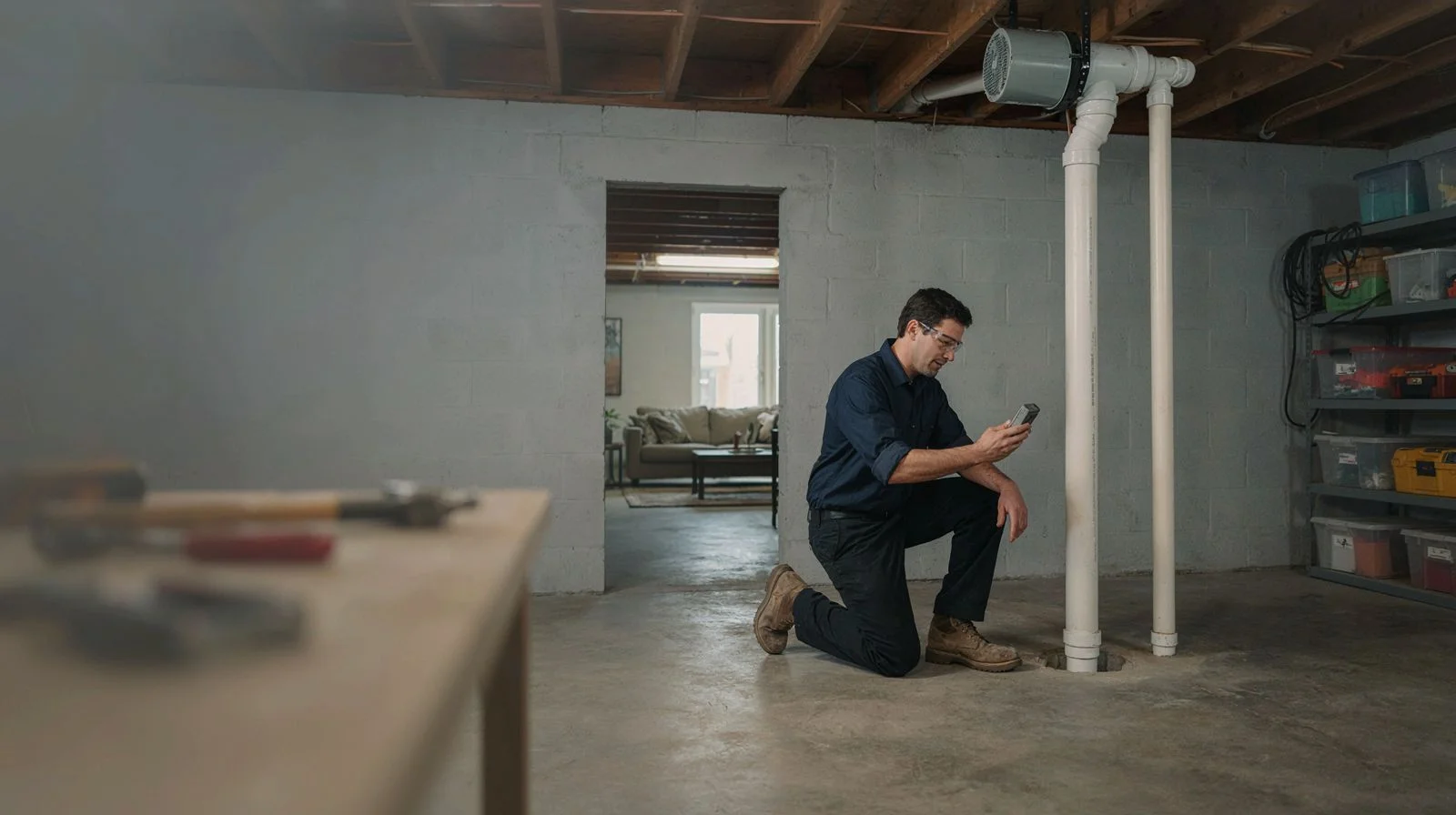
Marietta has many full basements under older masonry, along with pockets of crawlspaces and partial slabs. Pros begin with radon testing to pinpoint baseline levels, then design sub‑slab depressurization systems that create a gentle vacuum under the floor. Where slabs are segmented or additions create separate bays, they plan multiple suction points or interior crossovers to help air move freely under the footprint.
Crawlspaces are sealed with durable vapor barriers and tied into the mitigation system if needed. Sump pits get airtight lids with view ports and service grommets. On stone or brick foundations, installers core carefully, choose sleeves that protect brittle materials, and support pipes so vibration and noise stay low.
Radon testing done right
Short‑term testing establishes current conditions, and long‑term testing can confirm seasonal trends when needed. Crews set devices on the lowest livable level, explain closed‑building steps, and schedule pick‑up to match your routine. For home sales, they coordinate timing so the post‑mitigation radon test follows accepted protocols without slowing the transaction.
System design and placement
Exterior routes are chosen to be discreet and code‑appropriate, often along side elevations or rear corners to reduce visual impact from the street. Fans are placed outside the living space, commonly at grade on the exterior or in a garage attic when available, with the discharge above the roofline and away from windows and soffit vents. In river climate and winter freezes, pros size condensate drains correctly, use insulated sections where needed, and add snow‑sheds or stand‑offs to protect piping. Designs follow well‑documented reduction methods so systems are effective and serviceable over time EPA reduction methods.
In tight alleys common behind older homes, crews route piping to maintain clear walkways and respect property lines. If a straight shot is not possible, they may run an interior chase to a higher exit point, balancing performance, appearance, and maintenance access. Noise‑damping and vibration controls keep the system quiet for nearby porches and patios.
Working in historic settings
Many Marietta streets are part of a cherished historic fabric. Installers protect trim, match sealants to surrounding mortar or siding, and suggest paint‑match options for exterior runs. Where practical, they use existing mechanical spaces, under‑stair areas, or closets to conceal interior pathways, aiming to preserve both performance and character.
After installation: verification and upkeep
Once the fan is running and the system stabilizes, the matched pro performs a post‑mitigation radon test to confirm results. They document suction levels, label pipework, and include an easy‑to‑read gauge so you can see at a glance that the system is drawing. If your home later changes... like finishing a basement room or adding insulation... the same crews can retest and adjust the system plan as needed.
Good airflow under the slab maintains reliability. Keeping downspouts directed away from the foundation, checking sump covers, and leaving service clearances around fan units help the system work smoothly year‑round. If a fan eventually wears out, replacements are straightforward because piping, electric, and discharge height were planned with future service in mind.
Straightforward pricing and expectations
Every house is different, so pricing depends on factors like slab communication, vent routing, and fan size. For a simple overview of considerations specific to this town, see radon mitigation costs in Marietta.
When we schedule in Marietta
Standard appointments fall between 9 AM and 5 PM. Morning site visits often precede afternoon installations, especially when testing has already established clear needs. Because the drive follows PA‑462 or US‑30 and then PA‑441, teams usually arrive within a consistent window; if river traffic or bridge work is expected, they plan earlier departures to keep your day on track.
What to expect during the visit
- A clear explanation of test results and the mitigation plan.
- Careful coring and dust control to protect finishes.
- Neat exterior piping aligned with trim or corners.
- Labels and a system overview before the crew leaves.
Homes near the Northwest Lancaster County River Trail, around the Marietta Historic District, and along PA‑441 all benefit from the same fundamentals: a well‑sealed slab or crawlspace, consistent sub‑slab vacuum, and verification with a post‑mitigation radon test. With routes refined for this river town and experience in its housing styles, the matched pros make mitigation straightforward and effective.
Our Services in Marietta, PA
Typical radon mitigation cost in Marietta, PA from independent local contractors (same as elsewhere in the York, PA area): $1,100 - $3,800. See typical radon mitigation costs near Marietta, PA.
Why Marietta, PA Chooses Radon Mitigation York PA
Familiar with riverfront homes
Experience with Marietta’s historic masonry, tight alleys, and mixed slabs leads to systems that fit the property without fuss.
Clear testing and verification
Radon testing, a written plan, and a post‑mitigation radon test confirm results and make next steps simple.
Discreet, durable installs
Vent routes favor low‑visibility walls, protected fan placements, and materials suited to humidity and winter freezes.
Efficient scheduling from York
Pro crews use PA‑462 or US‑30 to reach Marietta predictably during standard hours, keeping projects on time.
Vetted local contractors
Radon Mitigation York PA pairs you with trusted area pros who follow proven methods and respect your home’s character.
Radon Mitigation FAQs in Marietta, PA
How do radon mitigation pros travel from 441 E. Market St., Suite 18202, York, PA 17403 to Marietta, PA, and which routes are most direct near PA‑462 and PA‑441?
Installers usually take PA‑462 east from York through Hallam to Wrightsville, cross the Veterans Memorial Bridge into Columbia, then head north on PA‑441 to reach Marietta addresses. When traffic is heavier on 462, they may choose US‑30 east across the Wright’s Ferry Bridge and connect to PA‑441 from there.
For historic houses in the Marietta Historic District with stone or brick foundations, how is radon mitigation tailored in Marietta, PA?
Pros core carefully through older materials, sleeve penetrations to protect the foundation, and plan suction points to work around thick stone walls. They often route piping along less visible sides or use interior chases to keep the exterior character intact while maintaining strong system performance.
Do homes near Chickies Rock County Park or along the Northwest Lancaster County River Trail need special vent placement for radon mitigation in Marietta, PA?
Homes close to the river often have outdoor living areas and narrow alleys, so vents are placed away from common seating and well above rooflines. Installers also account for prevailing winds along the river to keep discharges clear of windows and soffits.
Is well water radon testing recommended with radon mitigation in Marietta, PA for properties on the edge of town?
If your home uses a private well on the outskirts of Marietta, water testing is a smart addition. While air mitigation addresses soil gas, water testing checks another possible source so the overall plan reflects how radon may enter your home.
What seasonal factors along the Susquehanna in Marietta, PA affect radon testing and the post‑mitigation radon test?
Cold‑weather stack effect can increase indoor radon, so winter tests may read higher than summer. After a system is installed, pros schedule the verification test under standard closed‑building conditions to give a fair measure of year‑round performance.
Are permits or electrical inspections required for radon mitigation in Marietta, PA within the borough?
Requirements can vary by project. When a new electrical connection is needed for the fan, the contractor coordinates with a licensed electrician and follows the borough’s current procedures if a simple electrical permit or inspection is requested.
Contact Us Today for a Free Estimate
Free — no obligations