York-area radon help, close to Stewartstown
Radon Mitigation in Stewartstown, PA
We match Stewartstown homeowners with local radon testing and mitigation experts. Clear plans, neat installs, and a verified post‑mitigation radon test for peace of mind.
Radon solutions for Stewartstown homes
Radon mitigation in Stewartstown, PA matters, and Radon Mitigation York PA connects homeowners in Stewartstown, PA with local radon mitigation pros. Whether you need radon testing, a tailored mitigation system, or a post‑mitigation radon test, we help you find specialists who work in our part of York County every week.
The matched contractors understand southeast York County soils, common basement types, and how to place vents so systems perform well and look clean. They explain the plan in plain language and keep dust and disruption to a minimum.
Based in York, PA, we support Stewartstown coverage with simple scheduling and clear expectations. Phone support at (223) 877-3977 is available 9 AM – 5 PM for basic service and coverage questions.
From first test to final verification, the process is designed to be straightforward. Your matched pro will size the fan correctly, route piping neatly, and confirm results with a post‑mitigation radon test.
Radon factors in Stewartstown, PA
Stewartstown, PA sits in an area of York County where most homes have full basements or partial slabs, and many use concrete block foundations. Older farmhouses and post‑war ranches mix with newer colonials along the PA‑851 corridor, creating a range of foundation styles that can trap soil gases. Pennsylvania’s geology includes shale and sandstone that can release radon, and seasonal stack effect in heated homes can draw radon through slab cracks, sump lids, and block cores. Testing is widely recommended across the state, with many counties having elevated potential according to the EPA’s radon zone guidance EPA overview.
Serving Stewartstown from central York
From the office at 441 E. Market St., Suite 18202, York, PA 17403 in York, PA, matched pros head south to Stewartstown using routes they know well. The most direct drive typically follows I‑83 South to the PA‑851 exit near Shrewsbury, then east on PA‑851 into town. Depending on traffic and the address, another efficient option is PA‑24 South from York through Red Lion, then east on PA‑851. These routes make it straightforward to reach homes near Main Street, along the PA‑851 corridor, and streets branching toward the borough’s edges.
Working in Stewartstown means planning for a mix of home ages and layouts. There are 19th‑century structures with stone or brick sections, mid‑century ranches with block basements, and newer builds that use poured concrete. The pros we connect you with evaluate slab communication, plan suction points that reach the whole footprint, and route vents to meet performance needs without drawing attention to the system.
What we coordinate
Radon testing: Short‑term monitors or lab kits establish a baseline. In homes with multiple foundation sections (for example, a main basement and a small slab addition), devices may be placed in more than one area to capture a complete picture. Results guide the mitigation plan.
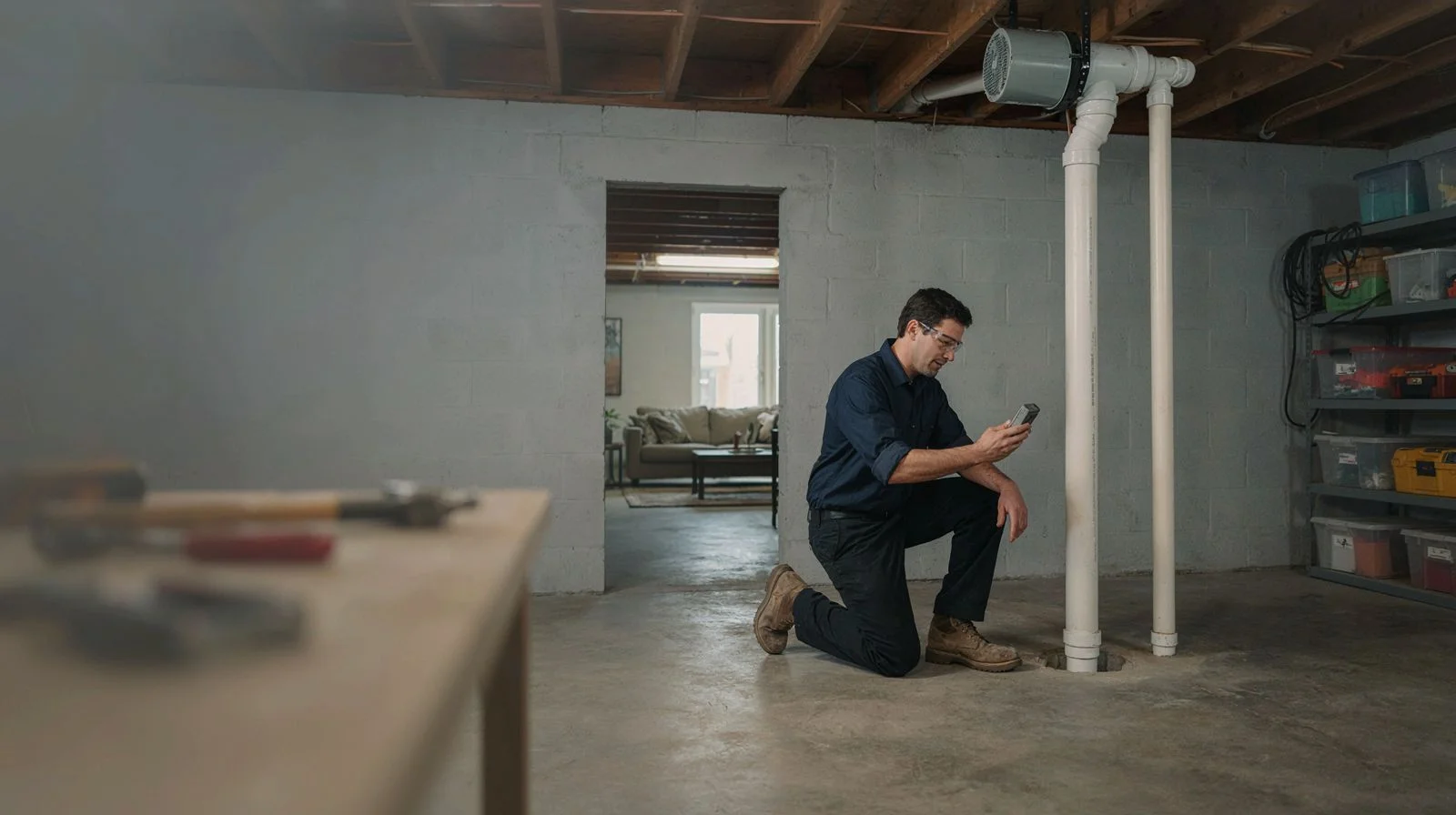
Radon mitigation: Most Stewartstown homes are good candidates for sub‑slab depressurization. The installer cores a discreet hole to create a suction pit, seals visible cracks and penetrations, and connects schedule‑40 PVC to an appropriately sized fan. When block foundations are present, block‑core suction or a small interior trunk line may be used to reach distant rooms.
Post‑mitigation radon test: After the system stabilizes, a follow‑up test confirms the reduction meets the EPA action level guidance EPA health info. Homeowners also receive simple tips for seasonal retesting and fan check‑ups.
Installation approach in Stewartstown homes
Suction point planning
For block basements common around Stewartstown, pros often start with a centrally located draw point that communicates under the slab and through block cores. If the home has a cold joint between a main slab and an addition, a second suction point or a short trench under the slab can help air move across both sections.
Clean vent routing
Exterior vents are typically run up a rear or side wall, above the eave line, and terminated away from windows. Along Main Street and near the Stewartstown Railroad, installers favor low‑profile runs that align with downspouts or trim, keeping the look tidy on homes with street‑facing facades. Where space is tight, interior garage runs can hide the pipe until it exits near the roof.
Fan placement and noise
Fans are mounted outside in weather‑rated housings or in a garage/attic when code and layout allow. The goal is steady pressure with minimal sound. On small lots or shared driveways, pros use vibration‑isolating couplers and proper supports so the system runs quietly day and night.
Moisture and sump considerations
If the home has an active sump, a sealed lid with gaskets and view panels is added so the sump can serve as part of the collection network. Downspouts and grading are checked to keep stormwater away from the foundation, which helps the system maintain reliable sub‑slab airflow.
Getting to your neighborhood
When leaving 441 E. Market St., Suite 18202, York, PA 17403, crews reach I‑83 South quickly from central York. For addresses east of the borough center or near Stewartstown Elementary School, PA‑24 South through Red Lion can be more direct, then PA‑851 brings the team into the heart of Stewartstown. For homes west of Main Street or closer to the Shrewsbury side, the I‑83 to PA‑851 route is often the fastest. Installers plan arrival windows around school traffic on PA‑851 and weekend activity near the Stewartstown Railroad to keep visits efficient.
Working near Stewartstown landmarks
- Main Street and the Stewartstown Railroad: Many houses here have limited side yards and visible front elevations. Pros favor side or rear vent stacks and paintable components when appropriate so the system blends with trim and gutters.
- Blocks off PA‑851: These homes often include additions over time. Installers look for slab breaks and may run a short manifold to ensure suction reaches every section.
- Edges of the borough: Properties transition to larger lots with private wells. If a private well supplies the home, adding a radon‑in‑water test can be a smart complement to air mitigation PA DEP guidance.
Safety, verification, and upkeep
York County winters can increase stack effect, which draws more soil gas into basements. Summer brings doors and windows opening more often, changing indoor pressure. The matched pros account for these swings by sizing the fan with a safety margin and sealing key entry points so the system stays effective across seasons. After installation, a post‑mitigation radon test verifies performance under closed‑house conditions.
Homeowners receive a simple checklist: glance at the manometer to confirm suction, listen for unusual fan noise, and keep the discharge clear of snow or debris. If a property has a crawlspace section, durable membrane sealing and perimeter taping help the system maintain steady negative pressure in that area.
Clear expectations and local know‑how
The Stewartstown area has many practical details that matter: routing vents around porch roofs, clearing stone ledges in older basements, and reaching far corners of split‑level layouts. The professionals we connect you with bring everyday experience from houses in and around Stewartstown, so they can explain why a single suction point may be enough in one home while another needs two.
Every property is unique, so the final plan and materials reflect your layout, testing results, and vent path options. For information on budgeting and common scope choices, see radon mitigation costs in Stewartstown.
Our Services in Stewartstown, PA
Independent local contractors in Stewartstown, PA typically charge $1,100 - $3,800 for radon mitigation, the same as across the York, PA area. See what radon mitigation costs in Stewartstown, PA.
Why Stewartstown, PA Chooses Radon Mitigation York PA
Local Stewartstown experience
Pros work along PA‑851 and Main Street regularly, so they understand how to route vents neatly on visible facades and reach slab areas added over time.
Thorough testing strategy
Baseline radon testing, targeted device placement, and a confirmed post‑mitigation radon test give clear before‑and‑after results.
Quiet, efficient systems
Fans are sized to your foundation and soil, with vibration control and smart routing that keeps noise low indoors and out.
Clear plans and tidy work
Installers explain the pathway, protect finishes, seal key entry points, and leave labels so you know how to monitor the system.
Helpful coordination from York
Service is organized from central York for predictable arrival via I‑83 or PA‑24, keeping appointments efficient for Stewartstown addresses.
Radon Mitigation FAQs in Stewartstown, PA
How do local pros travel from to radon mitigation jobs in Stewartstown, PA, and where do they typically stage near Main Street?
They usually head I‑83 South from central York, exit at PA‑851 by Shrewsbury, and continue east into Stewartstown. An alternate path is PA‑24 South through Red Lion, then PA‑851 east. Equipment is generally staged in a driveway or along a side street off Main Street to keep walkways open.
For homes near the Stewartstown Railroad or along Main Street in Stewartstown, PA, how is vent placement handled for radon mitigation?
Installers favor side or rear walls and align piping with downspouts to reduce visual impact on street‑facing elevations. Discharge points are extended above the eave line and away from windows, with fan locations chosen for quiet operation.
How is radon mitigation adapted for 1990s colonials and ranch homes in Stewartstown, PA with block basements or partial slabs?
Pros start with a central suction point sized to the slab and block cores, adding a second point if a cold joint limits communication. When additions exist, a short manifold or under‑slab trenching helps move air across both sections for consistent reduction.
Is well water radon testing recommended with radon mitigation in Stewartstown, PA, especially for properties on the borough’s edge?
If the home is on a private well, adding a radon‑in‑water test is a smart step alongside air mitigation. If water levels are elevated, the installer can discuss aeration or carbon treatment and coordinate sequencing so air and water solutions work together.
What seasonal factors in Stewartstown, PA influence radon testing and the post‑mitigation radon test?
Winter stack effect can raise indoor radon, while summer ventilation and AC can shift readings. Pros plan closed‑house conditions for accurate testing and schedule the verification test after the system has been running long enough to show stable reduction.
Are permits or electrical inspections required for radon mitigation in Stewartstown, PA?
Requirements can vary by borough or township. When a new electrical connection is needed for the fan, installers confirm what the local code office expects and arrange any simple inspections so the system meets local rules.
Contact Us Today for a Free Estimate
Free — no obligations